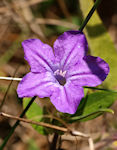
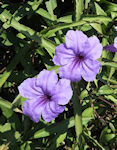
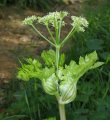
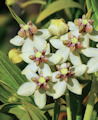
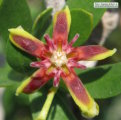
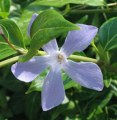
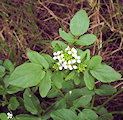
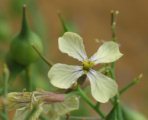
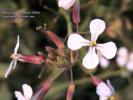
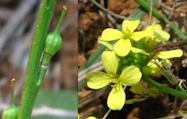
Family Description: The Acanthaceae are a diverse family of dicotyledonous flowering plants, primarily distributed across tropical and subtropical regions. Members are mostly herbs, shrubs, or climbers, and occasionally small trees. Vegetative characteristics include opposite phyllotaxy, often with entire or serrate leaf margins and well-developed lateral veins. Stipules are typically absent, and the stems are frequently swollen at the nodes.
Inflorescences may be terminal or axillary, often forming spikes, racemes, or panicles. Flowers are bisexual, zygomorphic, and usually showy, with a tubular, five-lobed calyx and a similarly shaped, bilabiate corolla. The androecium commonly consists of two or four stamens, which may be didynamous, sometimes accompanied by staminodes. The ovary is superior, bicarpellary, with axile placentation and typically two ovules per locule.
Fruits are mostly explosive capsules with a specialized retinaculum (jaculator) that aids in seed dispersal, a hallmark of the family. Seeds are often flattened and lack endosperm.
Acanthaceae exhibit considerable ecological versatility, occupying niches from rainforest understories to arid scrublands. Noteworthy genera include Justicia, Ruellia, Thunbergia, and Strobilanthes. Many species hold ethnobotanical value or serve ornamental purposes, reflecting both their ecological significance and horticultural appeal.
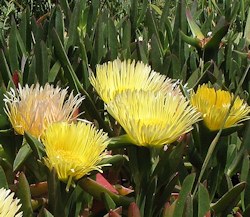
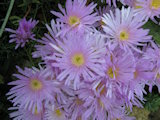
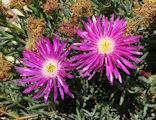
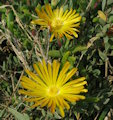
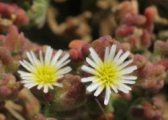
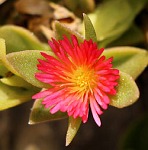
Family Description: Aizoaceae, commonly known as the ice plant family, is a diverse group of mostly succulent, dicotyledonous flowering plants within the order Caryophyllales. It includes around 135 genera and over 1,800 species, with the vast majority endemic to arid and semi-arid regions of southern Africa.
Members are typically annual or perennial herbs or subshrubs, often with prostrate or mat-forming growth habits. Stems may be erect or creeping, and many species exhibit sympodial branching. Leaves are usually opposite or alternate, simple, and succulent, with entire margins and no stipules. A distinctive feature is the presence of epidermal bladder cells, which give many species a glistening, crystalline appearance—hence the name “ice plants.”
Flowers are actinomorphic, bisexual, and often solitary or in cymose inflorescences. The perianth typically consists of five sepals, sometimes more, and numerous petaloid staminodes that mimic petals. True petals are absent. Stamens are numerous and may be arranged in whorls or bundles. The ovary is inferior to half-inferior, with axile or parietal placentation.
Fruits are usually capsular, often hygrochastic—opening when wet to disperse seeds via a jet-like mechanism. Seeds are small, numerous, and adapted for rapid germination in ephemeral conditions.
Family Description: Alismataceae, commonly known as the water-plantain family, is a group of aquatic or semi-aquatic monocotyledonous herbs within the order Alismatales. The family includes about 17–20 genera and over 100 species, with a cosmopolitan distribution, especially abundant in temperate and tropical wetlands.
Members are typically perennial herbs, though some may behave as annuals in seasonal habitats. They often grow in shallow water or muddy substrates, with corm-like or stoloniferous stems. Leaves are basal, with long petioles and sheathing bases; submerged leaves are usually linear, while emergent ones can be ovate, sagittate, or lanceolate.
Inflorescences are generally compound and whorled, though some species bear solitary or umbel-like flowers. Flowers are actinomorphic, bisexual or unisexual, and typically ephemeral. The floral formula includes three persistent sepals and three conspicuous petals, often white, pink, or purple. Stamens number 3, 6, 9, or more, and the superior ovary consists of numerous free carpels, each with one (rarely two) anatropous ovules.
Fruits are usually achenes or nutlets, aggregated into a head. Seeds lack endosperm and contain a curved or folded embryo.
Genera such as Alisma, Sagittaria, and Echinodorus are ecologically significant in freshwater systems and are often used in aquatic plant research.
Family Description: Amaranthaceae is a large and diverse family of flowering plants within the order Caryophyllales, comprising approximately 165 genera and over 2,000 species. Members range from annual and perennial herbs to subshrubs, shrubs, and a few small trees. They are widely distributed, with a strong presence in arid, saline, and disturbed habitats.
Leaves are typically simple, alternate or opposite, and exstipulate, often entire and sometimes succulent or hairy. Many species contain betalain pigments, which can impart red or purple coloration to vegetative parts. Stems may be herbaceous or woody, and some taxa exhibit anomalous secondary growth.
Flowers are generally small, actinomorphic, and bisexual or unisexual, often aggregated into dense inflorescences such as spikes or panicles. Each flower is subtended by bracts and bracteoles. The perianth consists of 1–5 tepals, usually herbaceous or scarious. Stamens number 1–5 and are inserted on a hypogynous disc. The ovary is superior, unilocular, and formed from 1–3 fused carpels, typically with a single basal ovule.
Fruits vary widely—utricles, capsules, berries, or nutlets—and seeds are usually small, with a curved embryo and little or no endosperm. Many species utilize C4 photosynthesis, contributing to their success in hot, dry environments.
Subfamalies: Agapanthoideae (= Agapanthaceae family), Allioideae (= Alliaceae family), Amaryllidoideae (Amaryllidaceae family senso strico)
Family Description: Amaryllidaceae is a family of monocotyledonous, mostly bulbous perennial herbs within the order Asparagales. It includes approximately 70–75 genera and over 1,600 species, with a cosmopolitan distribution but a strong center of diversity in South Africa and South America.
Vegetatively, members typically grow from true bulbs or rhizomes, with fibrous adventitious roots. Leaves are simple, entire, and usually basal, arranged in two ranks (distichous), and often linear to strap-shaped with parallel venation. The aerial stem is usually reduced to a scape, a leafless flowering stalk.
Inflorescences are typically umbellate, subtended by spathaceous bracts, and borne terminally on the scape. Flowers are actinomorphic (rarely zygomorphic), bisexual, and epigynous. The perianth consists of six tepals in two whorls, often fused into a tube. A corona may be present in some genera (e.g., Narcissus). Stamens are six, epiphyllous, and arranged in two whorls. The ovary is inferior, tricarpellary, syncarpous, and trilocular with axile placentation.
Fruits are typically loculicidal capsules or berries, and seeds are often endospermic with a straight or curved embryo. Many species are entomophilous, with adaptations for insect pollination, including showy flowers and nectar production.
Family Description: Anacardiaceae, commonly known as the cashew or sumac family, is a diverse group of flowering plants within the order Sapindales. It includes approximately 80 genera and over 800 species, ranging from trees and shrubs to woody climbers, with a predominantly tropical and subtropical distribution.
Vegetatively, members typically exhibit alternate, exstipulate leaves, which may be simple, trifoliolate, or pinnately compound. Leaflets often have entire or serrate margins, and the presence of resin ducts in the bark, leaves, and stems is a hallmark of the family—these often exude milky or resinous sap, sometimes containing urushiol, a skin irritant.
Inflorescences are usually terminal or axillary panicles, and flowers are small, actinomorphic or slightly zygomorphic, and often unisexual, with many species being dioecious. The floral formula is typically pentamerous, with five sepals and five petals, though variation exists. Stamens are usually 5–10, often arising from a nectariferous disc. The ovary is superior, unilocular, and formed from 1–3 carpels, typically with a single ovule.
Fruits are most commonly drupes, often resinous or fleshy, and seeds are usually without endosperm, containing a curved embryo. Wood anatomy often features resin canals and simple perforation plates.
Notable genera include Anacardium (cashew), Mangifera (mango), Pistacia (pistachio), Toxicodendron (poison ivy), and Rhus (sumac).
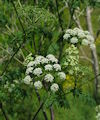
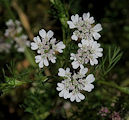
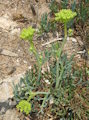
Family Description: Apiaceae, also known as the carrot or parsley family, is a large and distinctive group of aromatic, herbaceous dicotyledons within the order Apiales. It includes over 400 genera and nearly 3,800 species, with a cosmopolitan distribution, especially abundant in temperate regions of the Northern Hemisphere.
Plants are typically annual, biennial, or perennial herbs, though some are shrubs or small trees. Stems are often fistular (hollow) and ribbed. Leaves are alternate, usually compound and pinnately or ternately dissected, with sheathing petiole bases and no stipules. The foliage often emits a strong aroma due to the presence of secretory canals containing essential oils.
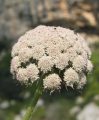
The hallmark of the family is the compound umbel inflorescence, often subtended by involucral bracts. Flowers are actinomorphic, epigynous, and pentamerous, with five sepals (often reduced), five petals, and five stamens. The inferior ovary is bicarpellary and syncarpous, with a prominent nectariferous disc (stylopodium) at the summit.
Fruits are typically schizocarps, splitting into two mericarp segments (a cremocarp), each containing a single seed. Mericarps often bear ridges and oil ducts (vittae). Seeds are endospermic with a curved embryo.
Apiaceae includes both culinary staples (e.g., Daucus, Apium, Coriandrum) and toxic species (e.g., Conium, Cicuta), making identification critical in both botanical and ethnobotanical contexts.
Family Description: Apocynaceae, commonly called the dogbane family, is a large and diverse group of dicotyledonous flowering plants in the order Gentianales. It includes around 400 genera and more than 4,500 species, encompassing trees, shrubs, woody vines, and herbaceous plants. The family is widely distributed, with its greatest diversity in tropical and subtropical regions.
Most members produce a milky latex, often toxic due to the presence of alkaloids and cardiac glycosides. Leaves are typically simple, entire, and without stipules, arranged oppositely or in whorls, with pinnate venation. Stems may be herbaceous or woody, and some species are succulent or climbing.
Inflorescences are usually cymose and may be terminal or axillary. Flowers are radially symmetrical or slightly bilaterally symmetrical, bisexual, and five-parted. The calyx is formed of five united sepals, and the corolla is sympetalous, often forming a tube with twisted or valvate aestivation. A corona may be present in some groups. Stamens are five, attached to the corolla, and often closely associated with the gynoecium, sometimes forming a complex pollination structure.
The ovary is superior, formed from two carpels, and may be united only at the style. Placentation is usually axile or marginal. Fruits vary widely and include follicles, berries, and drupes. Seeds are often endospermic and may bear hairs or wings for wind dispersal.
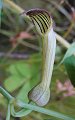
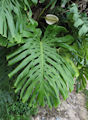
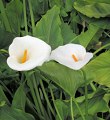
Family Description: Araceae, commonly known as the arum or aroid family, is a large and morphologically distinctive group of monocotyledonous flowering plants within the order Alismatales. It includes over 140 genera and more than 4,000 species, with a global distribution but greatest diversity in tropical regions.
Most members are herbaceous perennials, often with rhizomatous or tuberous stems. Some are epiphytic or aquatic, while others are climbers or terrestrial herbs. Leaves are typically simple or compound, with sheathing petiole bases and often large, showy blades. While monocots usually have parallel venation, many Araceae species exhibit reticulate venation, a rare trait among monocots. The tissues often contain raphides—needle-like calcium oxalate crystals that can be irritating.
The hallmark of the family is the inflorescence, consisting of a spadix (a fleshy spike bearing numerous small flowers) subtended or surrounded by a spathe, a modified bract that may be colorful or hood-like. Flowers are usually unisexual, and plants may be monoecious or dioecious. The perianth is often absent or reduced. Stamens may be free or fused into a synandrium, and the ovary is superior, typically unilocular with basal or parietal placentation.
Fruits are usually berries, often forming dense infructescences. Some species are thermogenic, generating heat to volatilize scent compounds and attract pollinators like beetles or flies
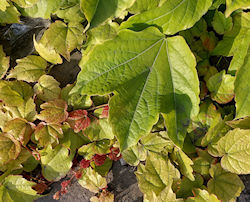
Family Description: Araliaceae, commonly known as the ginseng or ivy family, is a morphologically diverse group of flowering plants within the order Apiales. It includes approximately 40 to 50 genera and over 1,500 species, ranging from woody trees and shrubs to lianas and a few herbaceous forms. The family is predominantly tropical, though several species extend into temperate regions.
Vegetatively, members typically have alternate, simple or compound leaves, often palmately or pinnately divided, with long petioles and sheathing bases. Stipules are absent. Many species contain aromatic essential oils, and some exhibit prickles or spines. The stems are usually cylindrical and may be woody or herbaceous.
Inflorescences are characteristically compound umbels, though variations such as racemes or heads also occur. Flowers are actinomorphic, bisexual or unisexual, and typically pentamerous, with five sepals, five petals, and five stamens. The inferior ovary is syncarpous, usually 2- to 5-locular, with a single ovule per locule and a prominent nectariferous disc at the summit.
Fruits are generally fleshy drupes or berries, often containing multiple seeds. Seeds are endospermic with a small, straight embryo.
Notable genera include Panax (ginseng), Hedera (ivy), Aralia, and Schefflera.
Family Description: Araucariaceae is an ancient family of coniferous gymnosperms within the order Araucariales, comprising three extant genera: Araucaria, Agathis, and Wollemia. These trees are primarily distributed in the Southern Hemisphere, with notable centers of diversity in Australasia and South America. Fossil records indicate a much broader distribution during the Mesozoic era.
Members are typically large, evergreen trees, often reaching heights of 30 to 60 meters, with columnar trunks and whorled, horizontal branching. The leaves are spirally arranged and vary from needle-like to broad and flattened, often with parallel venation and persistent on the branches for many years.
The family is mostly dioecious, though some species are monoecious. Male cones are cylindrical and pendulous, composed of numerous spirally arranged microsporophylls bearing multiple pollen sacs. Female cones are large, erect, and globose to ovoid, with woody bract-scale complexes, each typically bearing a single large seed. Seeds are often winged and dispersed by wind or gravity.
Wood anatomy features large resin canals and a relatively uniform tracheid structure. These trees are ecologically significant in rainforest and montane habitats and are often dominant canopy species.
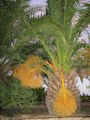
Family Description: Arecaceae, also known as the palm family, is a prominent group of monocotyledonous flowering plants within the order Arecales. It comprises over 180 genera and more than 2,600 species, primarily distributed across tropical and subtropical regions. Members range from towering trees to shrubs, climbers, and even stemless forms.
Vegetatively, palms are characterized by unbranched or occasionally branched trunks, often with persistent leaf bases. Leaves are typically large, alternate, and arranged in a terminal crown. They may be pinnately or palmately compound, with a sheathing base and a long petiole. Venation is parallel, and young leaves are often plicate.
Inflorescences are usually spadices enclosed in a woody or fibrous spathe. Flowers are small, actinomorphic, and unisexual or bisexual, with a perianth of six tepals in two whorls. Stamens are typically six, and the ovary is superior, tricarpellary, and syncarpous, with axile placentation.
Fruits are commonly drupes or berries, often containing a single seed with abundant endosperm. Many species are ecologically dominant in their habitats and economically important for products like coconuts, dates, and rattan.
Family Description: Aristolochiaceae, commonly known as the birthwort family, is a distinctive group of flowering plants within the order Piperales. It includes about seven genera and roughly 590 species, primarily distributed in tropical and subtropical regions, with some temperate representatives.
Members are typically herbaceous perennials, woody vines, or shrubs. Leaves are simple, alternate, and exstipulate, often with entire margins and aromatic oil glands. Stems may be twining or erect, and roots are usually taprooted and branched.
Flowers are often large, bizarrely shaped, and zygomorphic, though some are actinomorphic. They are usually solitary or arranged in racemes or cymes. The perianth is trimerous and petaloid, often forming a tubular or pitcher-like structure with a constricted neck lined with downward-pointing hairs—an adaptation for trapping pollinators. True petals are typically absent or vestigial.
The androecium consists of 6 to 36 stamens, often fused with the style to form a gynostemium. The ovary is inferior, syncarpous, and usually six-locular with numerous anatropous ovules on axile placentation.
Fruits are typically septicidal capsules that dehisce basally, and seeds are small, endospermic, and often dispersed by gravity or insects. Pollination is primarily entomophilous, often involving trap mechanisms and strong odors.
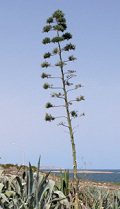
Family Description: Asparagaceae is a diverse family of monocotyledonous flowering plants within the order Asparagales, comprising over 2,500 species across roughly 150 genera. It has a nearly cosmopolitan distribution, with centers of diversity in tropical and subtropical regions, especially those with seasonal aridity.
Members range from herbaceous perennials to arborescent forms, including climbers and succulents. Many species grow from bulbs, corms, or rhizomes, and some exhibit fibrous or tuberous root systems. Leaves are typically simple, entire, and parallel-veined, arranged in basal rosettes or distichous ranks, and may be linear, strap-shaped, or lanceolate. Some taxa, such as Dracaena, show secondary thickening and tree-like growth.
Inflorescences are usually racemose or paniculate, terminal or axillary, and often subtended by bracts. Flowers are actinomorphic, bisexual, and trimerous, with six tepals in two whorls, often petaloid and sometimes fused into a tube. Stamens are six, opposite the tepals, and the ovary is superior, trilocular, with axile placentation.
Fruits are typically loculicidal capsules or berries, and seeds often contain phytomelanin, a black pigment. Subfamilies include Agavoideae, Scilloideae, and Asparagoideae, among others, reflecting the family's morphological and ecological breadth.
Family Description: Asphodelaceae is a family of monocotyledonous flowering plants within the order Asparagales, comprising around 40 genera and approximately 900 species. It has a broad but scattered distribution, with centers of diversity in southern Africa and Australia. The family includes a wide range of growth forms, from herbaceous perennials and succulents to arborescent species with thickened, woody stems.
Vegetatively, members often have rhizomes, tubers, or true bulbs, and roots may be fibrous, succulent, or tuberous. Leaves are typically basal, distichous or spirally arranged, and may be linear, lanceolate, or terete. Many species exhibit succulence, and some have marginal teeth or spines. Leaf venation is parallel, and the epidermis may contain anthraquinones, a chemical trait common in the family.
Inflorescences are usually terminal racemes, panicles, or spikes, borne on a leafless scape. Flowers are bisexual, actinomorphic or zygomorphic, and typically trimerous, with six tepals that may be free or basally fused. Stamens are six, often with hairy filaments, and the ovary is superior, trilocular, with axile placentation.
Fruits are usually loculicidal capsules or berries, and seeds are often black, sometimes winged or with phytomelanin. Subfamilies include Asphodeloideae (e.g., Aloe, Kniphofia), Hemerocallidoideae (Hemerocallis), and Xanthorrhoeoideae (Xanthorrhoea)
Family Description: Aspleniaceae, commonly known as the spleenwort family, is a group of ferns within the order Polypodiales. It includes around 700 species, primarily in the genus Asplenium, with a global distribution spanning tropical to temperate regions. Members are typically terrestrial or epilithic, and some are epiphytic, thriving in moist, shaded habitats.
Plants grow from creeping or erect rhizomes, often covered with clathrate (lattice-like) scales. Fronds are monomorphic and range from entire to 4-pinnate, with a wide variety of shapes and sizes. Leaf stalks (petioles) usually contain two vascular bundles that unite into an X-shape toward the apex.
A defining feature of the family is the elongated sori, which are typically arranged along one side of the veins and covered by a narrow, flap-like indusium. Sporangia are stalked, with a vertical annulus, and produce bilateral, bean-shaped spores.
Aspleniaceae is notable for its morphological diversity and ecological adaptability. Some species form natural hybrids, and molecular studies have revealed complex evolutionary relationships within the group.
Family Description: Asteraceae, also known as the daisy or sunflower family, is one of the largest families of flowering plants, comprising over 32,000 species across more than 1,900 genera. It is cosmopolitan in distribution, thriving in habitats ranging from deserts to alpine zones.
Members are typically herbaceous, though shrubs, vines, and even trees occur. Leaves are usually alternate, simple or compound, and exstipulate, with variable venation. Stems may be erect or prostrate, often fistular or ridged, and sometimes contain latex.
The hallmark of Asteraceae is the capitulum or head inflorescence, which mimics a single flower but is actually a composite of many small florets. These florets may be tubular (disc florets), ligulate (ray florets), or both, and are subtended by an involucre of bracts. Flowers are usually actinomorphic or zygomorphic, bisexual or unisexual, and pentamerous. The calyx is modified into a pappus of hairs or scales. The corolla is gamopetalous, and stamens are typically five, epipetalous, with syngenesious anthers. The ovary is inferior, unilocular, with basal placentation.
Fruits are cypselas, often crowned by the persistent pappus, aiding in wind dispersal. Seeds are usually endospermic with a curved embryo.
Family Description: Basellaceae is a small family of flowering plants within the order Caryophyllales, comprising about four genera and roughly 15 to 25 species. These are primarily herbaceous, perennial vines native to tropical and subtropical regions, especially in the New World.
Members are typically climbing or trailing plants, often with fleshy stems and leaves. Leaves are simple, alternate or opposite, exstipulate, and entire-margined, with considerable variation in shape even within a single species. The stems may be twining or sprawling, and some species develop tuberous rootstocks or aerial tubers for vegetative reproduction.
Inflorescences are usually axillary or terminal racemes or spikes, bearing small, actinomorphic, bisexual flowers. The perianth is petaloid, composed of 4 to 5 tepals, often fused at the base. Stamens are typically 5, opposite the tepals, and the ovary is superior, unilocular, with a single basal ovule. The style is simple or bifid, and the stigma is capitate or lobed.
Fruits are achenes or utricles, often enclosed by the persistent perianth. Seeds are endospermic with a curved embryo.
Notable genera include Basella (e.g., Basella alba, Malabar spinach), Anredera, Ullucus, and Tournonia.
Family Description: Berberidaceae, commonly known as the barberry family, is a group of flowering plants within the order Ranunculales. It includes approximately 14 to 18 genera and over 700 species, primarily distributed across temperate regions of the Northern Hemisphere, with some representatives in South America and Asia.
Members range from deciduous or evergreen shrubs to perennial herbs, often with spiny stems or leaf margins. Leaves are typically alternate, simple or compound, and exstipulate. In some genera, such as Berberis, the leaves are reduced and modified into spines, while photosynthesis is carried out by expanded leaf-like branches (cladodes).
Flowers are generally actinomorphic, bisexual, and trimerous or dimerous, with free sepals and petals arranged in whorls. The number of floral parts can vary, but a common pattern includes 6 sepals, 6 petals, and 6 stamens. Stamens are often sensitive and may move in response to touch. The ovary is superior, unilocular, and formed from a single carpel with basal placentation.
Fruits are typically berries or capsules, often brightly colored and bird-dispersed. Seeds usually contain endosperm and a small, straight embryo.
Notable genera include Berberis, Mahonia, Epimedium, Podophyllum, and Nandina.
Botanical Name
Common Name
Maltese Name
Flowering Period
Thumbnail Picture
Profile Type
BIGNONIACEAE Juss.
Bignonia Family
Subfamalies: nil.
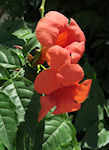
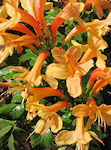
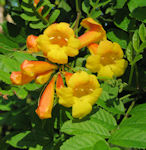
Family Description: Bignoniaceae, commonly known as the trumpet vine or jacaranda family, is a vibrant group of flowering plants within the order Lamiales. It includes around 80 to 110 genera and over 800 species, primarily distributed in tropical and subtropical regions, with a center of diversity in the Americas.
Most members are woody climbers (lianas), trees, or shrubs, though a few are herbaceous. Leaves are typically opposite and compound, often pinnate, and may feature a terminal leaflet modified into a tendril or hook for climbing. Stems in lianas often show a unique vascular pattern with phloem wedges embedded in the xylem, sometimes forming a cross-shaped structure.
Inflorescences are usually dichasial cymes, and flowers are zygomorphic, bisexual, and showy, often large and trumpet-shaped. The calyx is gamosepalous, with five lobes or bilabiate. The corolla is also gamopetalous, typically campanulate or funnel-shaped, with five lobes. Stamens are usually four, didynamous, with a fifth staminode. The ovary is superior, bilocular with axile placentation, and numerous ovules.
Fruits are often elongated, woody capsules that split open to release flattened, winged seeds, adapted for wind dispersal. Pollination is primarily by insects or birds, depending on floral morphology
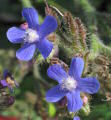
Family Description: Boraginaceae, commonly known as the borage or forget-me-not family, is a diverse group of flowering plants within the order Boraginales. It includes approximately 146 to 154 genera and over 2,700 species, with a cosmopolitan distribution and a strong presence in Mediterranean and temperate regions.
Most members are herbaceous plants, though shrubs, trees (Cordia), and even parasitic forms exist. Plants are often hispid, covered with coarse hairs containing silica or calcium carbonate, which can cause skin irritation. Leaves are alternate, simple, and exstipulate, typically entire and often rough to the touch.
Inflorescences are characteristically scorpioid cymes, coiled like a scorpion’s tail and uncoiling as flowers bloom. Flowers are actinomorphic, bisexual, and pentamerous, with a gamopetalous corolla that may be tubular, funnel-shaped, or rotate. A corona of scales or hairs often arises from the corolla throat. Stamens are five, epipetalous, and the gynoecium is bicarpellary, syncarpous, with a superior ovary that may become four-lobed due to a false septum, resulting in four nutlets as fruit.
Pollination is typically entomophilous, and many species exhibit color changes in the corolla with age, signaling pollinator readiness. Seeds are usually non-endospermic, with a curved embryo.
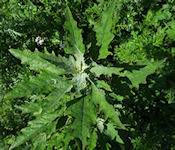
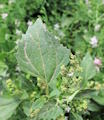
Wigandia caracasana Kunth - Historically established synonym widely adopted in Maltese flora
Wigandia
Maltese name not known
May-Sep
Normal Profile with
images.
BRASSICACEAE Juss.
Mustard or Cress Family Conservative synonym: Cruciferae
Subfamalies: Aethionemoideae, Brassicoideae
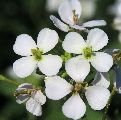
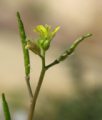
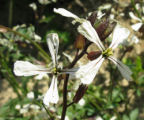
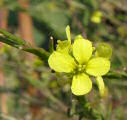
Family Description: Brassicaceae, also known as the mustard or crucifer family, is a large and economically important group of flowering plants within the order Brassicales. It includes over 370 genera and more than 4,000 species, with a global distribution but greatest diversity in temperate regions of the Northern Hemisphere.
Most members are herbaceous annuals, biennials, or perennials, though some are shrubs. They typically have a taproot system, often modified for storage in species like radish and turnip. Stems are usually erect, herbaceous, and may be branched or unbranched, often covered with simple or branched hairs.
Leaves are alternate, simple or pinnately lobed, exstipulate, and often form basal rosettes. They may emit a pungent odor due to sulfur-containing glucosinolates.
Inflorescences are usually racemose, and flowers are actinomorphic, bisexual, and tetramerous. The calyx has four sepals in two whorls, and the corolla has four petals arranged in a cross-like (cruciform) pattern. Stamens are typically six, with two shorter outer and four longer inner ones—a condition known as tetradynamous. The ovary is superior, bicarpellary, and syncarpous, with parietal placentation and a false septum (replum) dividing it into two chambers.
Fruits are usually siliques or silicles, dehiscent capsules that split open to release seeds. Seeds are endospermic with a curved embryo.
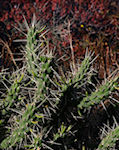
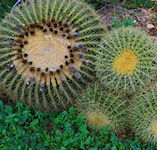
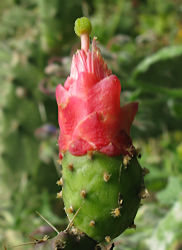
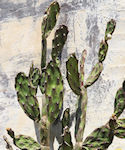
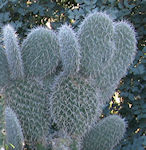
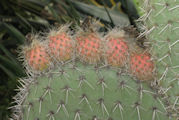
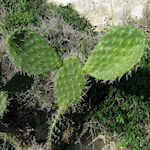
Family Description: Cactaceae, commonly known as the cactus family, is a striking group of succulent, perennial flowering plants within the order Caryophyllales. It includes around 127 genera and nearly 2,000 species, primarily native to the Americas, from Canada to Patagonia, with Mexico as a major center of diversity.
Most cacti are adapted to arid and semi-arid environments, exhibiting thick, fleshy stems that store water and carry out photosynthesis. A defining feature is the presence of areoles—specialized, cushion-like structures from which spines, flowers, and branches emerge. These areoles distinguish cacti from other succulents.
Leaves are typically absent or reduced to spines, minimizing water loss and deterring herbivores. Only a few genera, like Pereskia, retain broad, functional leaves. Stems may be ribbed or fluted, allowing expansion during water uptake. Many species use crassulacean acid metabolism (CAM) to photosynthesize efficiently while minimizing water loss.
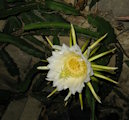
Flowers are often large, showy, and bisexual, with numerous tepals and stamens. They are usually solitary and arise from areoles. The ovary is inferior, and fruits are typically berries, containing numerous seeds.
Family Description: Campanulaceae, commonly known as the bellflower family, is a diverse group of flowering plants within the order Asterales. It includes about 84 genera and nearly 2,400 species, ranging from delicate annual herbs to woody shrubs and even small trees.
Most members are herbaceous perennials, often with milky latex and alternate, simple leaves that may be toothed or lobed. Stipules are absent. The stems can be erect or sprawling, and some species are climbers or rosette-forming.
The hallmark of the family is its showy, actinomorphic or zygomorphic flowers, typically five-lobed and gamopetalous, forming bell-, funnel-, or star-shaped corollas. The calyx is synsepalous, and the corolla is sympetalous, often blue, violet, or white. Stamens are five, usually epipetalous, and the ovary is inferior, typically 2- to 5-locular with axile placentation. A nectariferous disc is often present at the ovary apex.
Fruits are usually capsules or berries, with numerous small seeds that are often wind-dispersed. The family includes ornamental favorites like Campanula, Lobelia, and Platycodon, as well as medicinal and edible species.
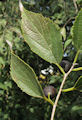
Family Description: Cannabaceae, commonly known as the hemp family, is a small but ecologically and economically significant group of flowering plants within the order Rosales. It includes about 11 genera and roughly 170 species, with a nearly worldwide distribution, especially in temperate regions.
Members range from herbaceous annuals (Cannabis) and twining vines (Humulus) to deciduous trees and shrubs (Celtis, Trema). Leaves are typically simple or palmately compound, arranged oppositely or in spirals, and always stipulate. Many species contain cystoliths (calcium carbonate crystals) and may have laticifers.
Plants are often dioecious, bearing unisexual flowers on separate individuals. Flowers are small, actinomorphic, and apetalous, adapted for wind pollination. The calyx is reduced, and the corolla is absent. Male flowers usually have five stamens, while female flowers have a superior, unilocular ovary formed from two fused carpels.
Fruits are typically achenes or drupes, often enclosed by a persistent bracteole. Seeds are endospermic with a straight embryo.
Southern nettle tree, European hackberry, Lote tree
Bagular
Mar-Apr
Normal Profile with
images.
CAPPARIDACEAE Juss.
Caper Family
Subfamalies: Capparoideae, Cleomoideae
Family Description: Capparidaceae, traditionally known as the caper family, is a group of flowering plants now often included within or closely allied to Brassicaceae and Cleomaceae under modern classifications. It comprises about 45 genera and 700 species, primarily distributed in tropical and subtropical regions.
Members range from herbs (e.g., Cleome) to shrubs (Capparis) and small trees (Crataeva). Many are adapted to arid environments, with some species like Capparis aphylla lacking leaves entirely. Leaves are typically alternate, simple or palmately compound, with stipules that may be modified into spines or glands. Stems are often woody, branched, and cylindrical.
Flowers are usually actinomorphic, bisexual, and tetramerous, though zygomorphy occurs in some species. A gynophore (elongated stalk bearing the ovary) is often present. The calyx has four free sepals, and the corolla has four free petals with imbricate or valvate aestivation. Stamens range from four to numerous, often forming a conspicuous tuft. The ovary is superior, unilocular, with parietal placentation.
Fruits vary from siliques (e.g., Cleome) to berries (Capparis) or drupes (Roydsia), and seeds are typically exalbuminous with a curved embryo. Pollination is usually entomophilous, and some species exhibit dichogamy.
Family Description: Caprifoliaceae, commonly known as the honeysuckle family, is a diverse group of flowering plants in the order Dipsacales, comprising about 42 genera and nearly 890 species. It is primarily distributed across the Northern Hemisphere, especially in temperate regions, with some species extending into tropical montane zones.
Members range from woody shrubs and vines (Lonicera, Symphoricarpos) to herbaceous perennials (Valeriana, Scabiosa). Leaves are typically opposite, simple or compound, and exstipulate, often with entire or toothed margins. Some species, like Lonicera japonica, are twining climbers with papery bark and prehensile petioles.
Flowers are usually zygomorphic or actinomorphic, bisexual, and pentamerous, with a gamopetalous corolla that is tubular, bell-shaped, or funnel-like. The calyx is small and persistent, and the ovary is inferior, typically 2- to 5-locular with axile placentation. A nectary disc is often present at the base of the style.
Fruits vary from berries and drupes (Lonicera, Symphoricarpos) to achenes and capsules (Scabiosa, Valeriana), often with persistent sepals that aid in dispersal. Seeds are usually endospermic, with a straight embryo.
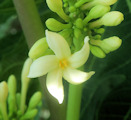
Family Description: Caricaceae is a small but distinctive family of flowering plants in the order Brassicales, best known for its most famous member: Carica papaya (papaya). The family includes about six genera and 30–35 species, primarily distributed in tropical Central and South America, with a few species in Africa.
Most members are short-lived, soft-wooded trees or shrubs, though some (Jarilla) are herbaceous and one (Vasconcellea horovitziana) is a liana. Plants typically have milky latex, and stems are often unbranched, bearing a terminal crown of large, palmately lobed or entire leaves. Leaves are alternate, exstipulate, and long-petioled.
Flowers are unisexual (plants are monoecious or dioecious), often with floral polymorphism. Male flowers are usually borne in pendant racemes, with a tubular, gamopetalous corolla and 10 stamens in two whorls. Female flowers are often solitary or in small clusters, with free or basally united petals, and a superior ovary that is unilocular with parietal placentation. Styles are short, ending in five stigmas, which may be bifid or branched.
Fruits are typically large berries, like the papaya, containing many seeds embedded in a mucilaginous pulp. Seeds are endospermic, often with a sculptured testa.
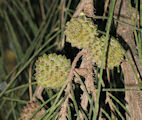
Family Description: Casuarinaceae, commonly known as the she-oak or beefwood family, is a fascinating group of dicotyledonous flowering plants in the order Fagales, comprising about 4 genera and 90+ species. Native to Australia, Southeast Asia, eastern Africa, and the Pacific Islands, these plants are well-adapted to dry, nutrient-poor soils, often forming part of coastal or arid ecosystems.
Most members are trees or shrubs, either monoecious or dioecious, with a distinctive equisetoid appearance—their green, jointed, photosynthetic branchlets resemble horsetails (Equisetum). True leaves are minute, scale-like, and arranged in whorls at the nodes, forming a toothed sheath around the branchlets.
Male flowers are tiny and borne in catkin-like spikes at the tips of branchlets, each consisting of a single stamen and a pair of bracteoles. Female flowers are grouped in dense, globular heads, which mature into woody, cone-like infructescences composed of hardened bracteoles enclosing winged nuts (samaras). The ovary is bicarpellary, unilocular, and superior, with two long stigmas.
Pollination is anemophilous (wind-driven), and the plants often form symbiotic root nodules with Frankia bacteria, enabling nitrogen fixation—a key adaptation to poor soils.
Family Description: Casuarinaceae, commonly known as the she-oak or beefwood family, is a fascinating group of dicotyledonous flowering plants in the order Fagales, comprising about 4 genera and 90+ species. Native to Australia, Southeast Asia, eastern Africa, and the Pacific Islands, these plants are well-adapted to dry, nutrient-poor soils, often forming part of coastal or arid ecosystems.
Most members are trees or shrubs, either monoecious or dioecious, with a distinctive equisetoid appearance—their green, jointed, photosynthetic branchlets resemble horsetails (Equisetum). True leaves are minute, scale-like, and arranged in whorls at the nodes, forming a toothed sheath around the branchlets.
Male flowers are tiny and borne in catkin-like spikes at the tips of branchlets, each consisting of a single stamen and a pair of bracteoles. Female flowers are grouped in dense, globular heads, which mature into woody, cone-like infructescences composed of hardened bracteoles enclosing winged nuts (samaras). The ovary is bicarpellary, unilocular, and superior, with two long stigmas.
Pollination is anemophilous (wind-driven), and the plants often form symbiotic root nodules with Frankia bacteria, enabling nitrogen fixation—a key adaptation to poor soils.
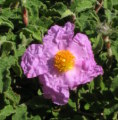
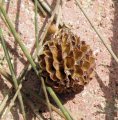
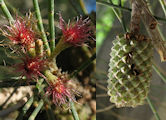
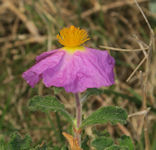
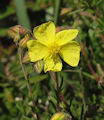
Family Description: Cistaceae, commonly known as the rock-rose family, is a small but ecologically significant group of flowering plants in the order Malvales. It includes about 170 to 200 species across 8 genera, primarily native to the Mediterranean region, with some species extending into North and South America.
These plants are typically subshrubs or low shrubs, though a few are herbaceous. They thrive in dry, sunny habitats and are well adapted to poor, rocky soils, often forming part of Mediterranean scrublands. Many species are cultivated for their ornamental value, thanks to their profusion of showy, short-lived flowers in shades of white, pink, or yellow.
Flowers are bisexual and actinomorphic, usually solitary or arranged in cymes. Most species have five free petals, often crumpled in bud, and five sepals, with the outer two narrower and sometimes functioning as bracteoles. Stamens are numerous and variable in length, arising from a disc at the base of the ovary. The ovary is superior, typically tricarpellary, with parietal placentation and multiple ovules per placenta.
Fruits are capsules, usually dehiscing by five or ten valves, and seeds are small, hard-coated, and often require scarification or fire to germinate—an adaptation to wildfire-prone environments. Many species form mycorrhizal associations with fungi like Tuber, enhancing nutrient uptake in poor soils.
Notable genera include Cistus, Helianthemum, Tuberaria, and Lechea.
Thyme rock rose, Thyme-leaved rock rose, Clammy cistus
Ċistu żgħir
Mar-May
Normal Profile with
images.
COLCHICACEAE DC.
Meadow-saffron Family
Subfamalies: Wurmbeoideae, Uvularioideae
Family Description: Colchicaceae is a family of monocotyledonous flowering plants in the order Liliales, comprising about 15 genera and nearly 285 species. These plants are primarily herbaceous perennials that grow from corms or rhizomes, and they are distributed across temperate and tropical regions, especially in the Southern Hemisphere.
Vegetatively, members often have basal or cauline leaves that are simple, entire, and parallel-veined, sometimes sheathing the stem. The stems may be erect, branched, or even nearly absent, and the plants often emerge seasonally from underground storage organs.
Flowers are typically bisexual, actinomorphic, and hypogynous, with six tepals arranged in two whorls. These may be free or fused at the base, sometimes forming a tube. The six stamens are usually inserted at the base of the perianth and may be free or slightly fused. The ovary is superior, trilocular, with axile placentation and numerous ovules. Styles may be free or united, and the stigmas are often three-lobed or branched.
Fruits are usually capsules, either septicidal or loculicidal, and seeds are often globose, sometimes with a fleshy aril or raphe. A distinctive chemical trait of the family is the presence of colchicine, a toxic alkaloid used medicinally and in plant breeding for inducing polyploidy.
Notable genera include Colchicum (autumn crocus), Gloriosa (glory lily), Wurmbea, and Iphigenia
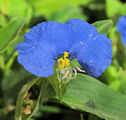
Family Description: Commelinaceae, commonly known as the dayflower or spiderwort family, is a diverse group of monocotyledonous flowering plants in the order Commelinales. It includes about 41 genera and over 700 species, primarily distributed in tropical and subtropical regions, with some extending into temperate zones.
These plants are mostly herbaceous perennials or annuals, though a few are epiphytes or climbers. They often have jointed, succulent stems with swollen nodes, and their leaves are simple, alternate, and sheathing at the base, with parallel venation. A distinctive feature is the involute leaf folding—the leaves unroll from the sides inward, a trait shared with grasses.
The inflorescence is typically a cincinnus (a type of monochasial cyme), often enclosed in a spathe-like bract. Flowers are ephemeral, usually lasting only a day, and can be actinomorphic or zygomorphic, depending on the genus. They are bisexual or unisexual, with six tepals arranged in two whorls—outer ones greenish and inner ones often brightly colored (blue, violet, yellow, or white). The androecium typically consists of six stamens, though some may be reduced to staminodes. Stamens often have hairy filaments, and the anthers are bithecous.
The gynoecium is tricarpellary and syncarpous, with a superior ovary that is usually trilocular, though it may be bilocular in some species. Placentation is axile, and the ovules are few to many per locule. The fruit is generally a loculicidal capsule, though it may be indehiscent in some taxa. Seeds are endospermic, often with a curved embryo.
Notable genera include Tradescantia (spiderwort), Commelina (dayflower), Rhoeo, Zebrina, and Cyanotis. Many are cultivated as ornamentals or used in traditional medicine, and some species are edible or used as forage.
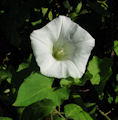
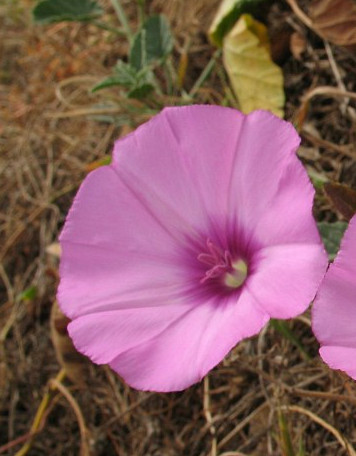
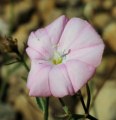
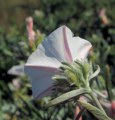
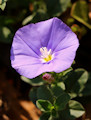
Family Description: Convolvulaceae, commonly known as the morning glory or bindweed family, is a large and diverse group of flowering plants in the order Solanales, comprising about 60 genera and over 1,600 species. These plants are found worldwide, especially in tropical and subtropical regions, and are well known for their twining stems and vibrant, funnel-shaped flowers.
Most members are herbaceous vines, though the family also includes shrubs, trees, and a few aquatic or parasitic species. The stems are often twining or trailing, and many contain latex. Leaves are typically alternate, simple, and exstipulate, with entire or lobed margins. In parasitic genera like Cuscuta (dodder), leaves are reduced to scales, and the plant lacks chlorophyll.
Flowers are usually actinomorphic, bisexual, and pentamerous, with a gamopetalous corolla that is often funnel-shaped or campanulate. The calyx consists of five sepals, usually free and persistent. Stamens are five, epipetalous, and often unequal in length. The ovary is superior, bicarpellary and syncarpous, typically with axile placentation and two ovules per locule.
Fruits are generally capsules, though berries and nuts also occur. Seeds are endospermic, often with a curved or coiled embryo. Pollination is usually entomophilous, and many species open their flowers in the morning—hence the name “morning glory.”
Economically, the family includes important food crops like sweet potato (Ipomoea batatas), ornamental plants such as Ipomoea, Convolvulus, and Calystegia, and medicinal or psychoactive species like Turbina corymbosa. Some, like Cuscuta, are agricultural pests.
Family Description: Crassulaceae, commonly known as the stonecrop or orpine family, is a fascinating group of succulent flowering plants in the order Saxifragales. It includes about 30 to 35 genera and roughly 1,400 species, making it the largest family in its order. These plants are distributed worldwide—from tropical to boreal zones—but are especially abundant in arid and rocky habitats, such as those in Southern Africa and the Mediterranean.
Members of Crassulaceae are typically herbaceous perennials or low shrubs, though some are annuals or aquatic. Their most distinctive feature is their succulent leaves, which store water and often form rosettes. These leaves are usually simple, entire, and exstipulate, and the stems often have swollen nodes. Many species exhibit Crassulacean Acid Metabolism (CAM), a photosynthetic adaptation that allows them to conserve water by opening stomata at night.
The flowers are bisexual, actinomorphic, and usually 4- or 5-merous, with sepals, petals, stamens, and carpels often in equal numbers. The sepals and petals may be free or fused at the base, and the stamens are typically twice the number of petals. The ovary is superior, composed of 3 to 10 free carpels, each with a nectar gland at its base. Fruits are usually follicles, and seeds are often small and numerous.
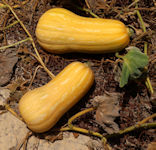
Family Description: Cucurbitaceae, commonly known as the gourd family, is a vibrant and economically vital group of flowering plants in the order Cucurbitales. It includes around 98 to 101 genera and nearly 975 species, many of which are cultivated worldwide for food, ornamentals, or fiber. Familiar members include cucumbers, melons, squashes, pumpkins, gourds, and loofahs.
Most cucurbits are fast-growing, herbaceous vines, either annual or perennial, with tendrils that help them climb or sprawl. These tendrils are typically spirally coiled and arise opposite the leaves, which are alternate, simple, and palmately lobed or veined. The stems are often angular and hairy, and the plants are highly sensitive to frost, limiting their cultivation to warmer climates.
Flowers are unisexual, with male and female flowers usually borne on the same plant (monoecious), though dioecy also occurs. They are pentamerous, with five sepals and five petals, often yellow or white. Male flowers typically have five stamens, which may be free or fused in complex ways, while female flowers have an inferior ovary composed of three fused carpels with parietal placentation.
The fruit is a pepo, a specialized type of fleshy berry with a tough rind and many seeds. These fruits can reach impressive sizes, and in some species, like the Javan cucumber (Alsomitra macrocarpa), seeds are winged for wind dispersal.
Family Description: Cupressaceae, commonly known as the cypress family, is a diverse and widespread group of coniferous, evergreen trees and shrubs in the order Pinales. It includes about 30 genera and 130–140 species, with members ranging from towering redwoods to compact junipers. These plants are found across a wide range of habitats—from arid deserts to temperate rainforests and high mountain slopes.
Most species are monoecious, though some are dioecious or subdioecious. The leaves vary with age: young plants often bear needle-like leaves, while mature individuals typically have scale-like leaves arranged in spirals, opposite pairs, or whorls. These leaves are usually evergreen and persist for several years, though a few genera like Taxodium and Metasequoia are deciduous.
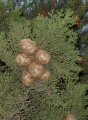
Seed cones are highly variable: they may be woody, leathery, or fleshy (as in Juniperus), and their scales are typically fused with the bract scale, often forming a visible umbo. The seeds are usually small, flattened, and winged, although some genera produce wingless seeds. Pollen cones are more uniform—small, often clustered, and bearing spirally or oppositely arranged scales.
The family includes some of the tallest and longest-lived trees on Earth, such as Sequoiadendron giganteum (giant sequoia) and Sequoia sempervirens (coast redwood). Economically, Cupressaceae provides timber, ornamental trees, essential oils, and resins.
Sandarac gum tree, Mediterranean alerce, Arar tree
Siġra tal-Għargħar, Għargħar
All year
Normal Profile with
images.
CYCADACEAE Persoon
Cycad Family
Subfamalies: nil.
Family Description: Cycadaceae is a family of ancient, palm-like gymnosperms in the order Cycadales, with a fossil record dating back to the Mesozoic Era. It includes a single extant genus, Cycas, comprising over 100 species distributed across tropical and subtropical Asia, Oceania, and parts of eastern Africa. These plants are often mistaken for palms or ferns but are evolutionarily distinct and among the most primitive seed plants still living today.
Members of Cycadaceae are typically dioecious, meaning male and female reproductive structures occur on separate plants. They have unbranched or sparsely branched trunks, often with a crown of large, pinnately compound leaves that emerge in whorls. The leaves are leathery, with parallel venation and circinate vernation (they unfurl like ferns).
Male plants produce cones (microstrobili) that bear pollen, while female plants bear megasporophylls—leaf-like structures that are not organized into cones (a key trait distinguishing Cycas from other cycads). These megasporophylls are spirally arranged and bear ovules along their margins. Fertilization is wind- or insect-mediated, and the seeds are large, often brightly colored, and sometimes edible after detoxification.
The stem anatomy is also distinctive, with a large central pith and a narrow zone of soft wood. Many species form coralloid roots that house nitrogen-fixing cyanobacteria, aiding survival in nutrient-poor soils.
Botanical Name
Common Name
Maltese Name
Flowering Period
Thumbnail Picture
Profile Type
CYMODOCEACEAE N. Taylor
Manatee-grass Family
Subfamalies: nil.
Family Description: Cymodoceaceae, often called the manatee-grass family, is a small but ecologically vital group of marine flowering plants in the order Alismatales. It includes about five genera and 17 species, all of which are submerged, salt-tolerant seagrasses found in tropical and subtropical coastal waters around the world.
These plants are perennial, dioecious herbs that grow from creeping rhizomes, which may be herbaceous and monopodial (as in Cymodocea, Halodule, and Syringodium) or woody and sympodial (as in Amphibolis and Thalassodendron). The leaves are alternate, arranged in two rows, with a sheathing base and a linear or needle-like blade. They often bear tannin cells, visible as dark stripes or dots, and may have a ligule at the junction of sheath and blade.
Flowers are tiny, unisexual, and hydrophilous, lacking a perianth and enclosed by a leaf-like bract. Male flowers typically have two anthers that release filamentous pollen, which may float on the water surface (epihydrophily) or move below it (hypohydrophily), depending on the genus. Female flowers consist of two free ovaries, usually with a long style or divided stigmas. Only one ovule typically develops into a fruit.
Fruits are indehiscent, with a stony pericarp, and may be viviparous in some genera like Amphibolis. Seeds are adapted for marine dispersal, and the family exhibits remarkable reproductive strategies to ensure pollination in underwater environments.
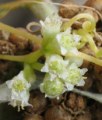
Family Description: Cynomoriaceae is a small, highly specialized family of holoparasitic flowering plants, meaning its members lack chlorophyll and rely entirely on host plants for nutrients. The family contains a single genus, Cynomorium, with species like Cynomorium coccineum—commonly known as the Maltese fungus or desert thumb—found in arid and semi-arid regions across the Mediterranean, Middle East, and Central Asia.
These plants are fleshy, reddish-brown, and achlorophyllous, emerging from a large underground rhizome that attaches to host roots via numerous haustoria. Common hosts include species from Chenopodiaceae, Asteraceae, Tamaricaceae, Fabaceae, and Plumbaginaceae.
The visible part of the plant is actually a club-shaped inflorescence, densely packed with minute, unisexual or bisexual flowers. Male flowers have 4-locular anthers and distinctive clavate sepals, while female flowers possess a unilocular ovary with 2–3 syncarpous carpels and a bifid or trifid style. Pollination is typically by flies, and the fruit is a small, indehiscent nut-like structure containing a single seed.
Cynomoriaceae is cytologically notable for its bimodal karyotype (2n = 28), with both macro- and microchromosomes. Its unusual morphology and parasitic lifestyle have made it a subject of interest in evolutionary and ecological studies.
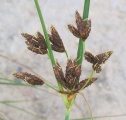
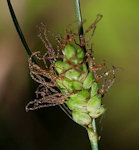
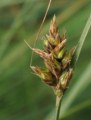
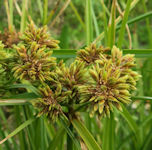
Family Description: Cyperaceae, commonly known as the sedge family, is a large and globally distributed group of monocotyledonous flowering plants in the order Poales. It includes around 90–100 genera and over 5,500 species, making it one of the ten largest families of flowering plants. Sedges are especially abundant in wetlands, marshes, and damp meadows, though they also thrive in alpine, arid, and coastal habitats.
These plants are typically herbaceous perennials, though some are annuals. A hallmark feature is their solid, often triangular stems—a trait captured in the botanical mnemonic “sedges have edges.” Leaves are simple, linear, and grass-like, arranged in three ranks, with closed sheaths and no ligules. Many species spread via rhizomes or tubers, allowing them to form dense colonies.
The inflorescence is usually a spikelet, composed of small, inconspicuous flowers, each subtended by a glume. Flowers are often unisexual or bisexual, hypogynous, and monochlamydeous—lacking a true perianth, though some have scales or bristles in its place. Stamens typically number 1 to 3, and the gynoecium is bicarpellary or tricarpellary, syncarpous, with a superior, unilocular ovary and a single basal ovule. The stigmas are often feathery, aiding in wind pollination.
The fruit is a nut or achene, often trigonous (three-angled), and the seeds are endospermic, with a small, straight embryo. Some species, like Cyperus papyrus, have historical significance—papyrus was made from its pith—while others, like Cyperus esculentus (tigernut), are cultivated for food.
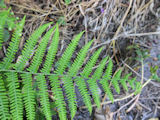
Family Description: Dennstaedtiaceae, commonly known as the bracken family, is a cosmopolitan group of terrestrial ferns in the order Polypodiales, comprising about 10 genera and 250–265 species. While the family is globally distributed, it is especially diverse in tropical regions, with some genera extending into temperate zones.
These ferns are typically medium to large in size, often occupying open or disturbed habitats—a trait that sets them apart from many shade-loving fern families. Most species grow from long-creeping rhizomes, which are solenostelic (sometimes polycyclic), and are covered in hairs or non-peltate scales. A distinctive feature is the presence of epipetiolar buds at the base of the petiole, which can give rise to new rhizomes, aiding in vegetative spread.
The leaves are highly divided, often decompound, and in some species, indeterminate in growth, allowing them to become very large and even scandent (climbing). Leaf venation is usually free, though sometimes anastomosing, and some species bear prickles.
Sori (clusters of sporangia) are typically marginal or submarginal, either discrete or continuous, and are often protected by a combination of a recurved leaf margin and a membranous indusium, forming a cup-like structure. The sporangia are long-stalked with a vertical, interrupted annulus, and the spores may be monolete or trilete, varying by species.
The most economically significant genus is Pteridium, particularly Pteridium aquilinum (bracken), which is considered one of the world’s most aggressive weeds due to its extensive rhizome system and allelopathic properties. Other genera, such as Dennstaedtia, Hypolepis, and Microlepia, are cultivated as ornamentals.
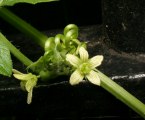
Family Description: Dioscoreaceae, commonly known as the yam family, is a group of monocotyledonous flowering plants in the order Dioscoreales, comprising about 715 species across 9 genera, with Dioscorea being by far the largest and most economically significant genus.
These plants are primarily twining vines or lianas, though a few are erect herbs. They grow from rhizomes or tubers, which are often large and starchy—making them important food sources in many tropical regions. The stems are typically cylindrical, sometimes winged or prickly, and may twine either clockwise or counterclockwise. Many species exhibit a distinctive atactostele—a scattered arrangement of vascular bundles in the stem.
Leaves are alternate or opposite, simple or palmately compound, often cordate (heart-shaped), and typically have 3–13 prominent basal veins. Petioles are long and often pulvinate at both ends, and stipules, when present, may appear as small spines or auricles.
Flowers are unisexual, and plants are usually dioecious. They are small, actinomorphic, and arranged in spikes, racemes, or panicles. The perianth consists of six tepals in two whorls, often petaloid and sometimes fused at the base. Male flowers have six stamens, though some may be reduced to three or even absent. Female flowers have an inferior, trilocular ovary with axile placentation, and typically two ovules per locule. The styles are three, either free or fused at the base.
Fruits are usually capsules, berries, or winged samaras, and seeds may be winged or unwinged, with endosperm and a small embryo. Many species also produce bulbils—small aerial tubers that aid in vegetative reproduction.
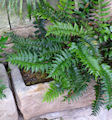
Family Description: Dryopteridaceae, commonly known as the wood fern or shield fern family, is a large and cosmopolitan group of leptosporangiate ferns in the order Polypodiales. It includes about 40–50 genera and approximately 1,700 species, with a global distribution but greatest diversity in temperate regions and tropical mountains.
These ferns are typically terrestrial or epipetric (growing on rocks), though some are epiphytic or hemiepiphytic. They often grow from creeping, ascending, or erect rhizomes, which are covered in non-clathrate scales. The fronds are usually monomorphic (uniform in shape), though some species exhibit dimorphic fronds with distinct fertile and sterile forms. Leaf blades are often pinnate to decompound, and the venation may be free or anastomosing, sometimes forming areoles with or without included veinlets.
A key feature of Dryopteridaceae is the presence of round sori (clusters of sporangia) on the underside of the fronds, typically protected by a kidney-shaped (reniform) or peltate indusium. The sporangia are stalked, with a vertical annulus, and produce monolete, reniform spores. These spores are often bean-shaped and may have a winged or ornamented perine. Many species are cultivated as ornamentals, and some have been used in traditional medicine or veterinary applications. Notable genera include: Dryopteris (shield ferns); Polystichum (holly ferns); Elaphoglossum (tongue ferns); Ctenitis and Arachniodes
Family Description: Elaeagnaceae, commonly known as the oleaster family, is a small but ecologically and economically notable group of flowering plants in the order Rosales. It comprises about 60 species across three genera: Elaeagnus, Hippophae, and Shepherdia. These are mostly shrubs or small trees, often found in temperate and subtropical regions of the Northern Hemisphere, including parts of Asia, Europe, and North America.
Members of this family are typically thorny, with simple, alternate leaves that are often covered in silvery or rusty scales or hairs, giving them a distinctive sheen. This adaptation helps reduce water loss, making many species well suited to dry (xeric) or saline (halophytic) environments. A remarkable trait of Elaeagnaceae is their ability to fix atmospheric nitrogen through symbiosis with Frankia bacteria in root nodules, which enhances their role in soil reclamation and ecological restoration.
The flowers are usually unisexual or bisexual, small, and lack petals, consisting instead of a tubular calyx formed by fused sepals. Male flowers typically have 4–8 stamens, while female flowers contain a superior ovary with a single carpel and ovule. The fruit is either a drupe-like structure or achene, enclosed by the fleshy, persistent calyx, and contains a single seed with little or no endosperm and thick, fleshy cotyledons.
Notable species include Elaeagnus angustifolia (Russian olive), Hippophae rhamnoides (sea buckthorn), and Shepherdia argentea (silver buffalo berry). These are valued for their ornamental appeal, edible fruits, and medicinal or ecological uses.
Family Description: Elaeagnaceae, commonly known as the oleaster family, is a small but ecologically and economically notable group of flowering plants in the order Rosales. It comprises about 60 species across three genera: Elaeagnus, Hippophae, and Shepherdia. These are mostly shrubs or small trees, often found in temperate and subtropical regions of the Northern Hemisphere, including parts of Asia, Europe, and North America.
Members of this family are typically thorny, with simple, alternate leaves that are often covered in silvery or rusty scales or hairs, giving them a distinctive sheen. This adaptation helps reduce water loss, making many species well suited to dry (xeric) or saline (halophytic) environments. A remarkable trait of Elaeagnaceae is their ability to fix atmospheric nitrogen through symbiosis with Frankia bacteria in root nodules, which enhances their role in soil reclamation and ecological restoration.
The flowers are usually unisexual or bisexual, small, and lack petals, consisting instead of a tubular calyx formed by fused sepals. Male flowers typically have 4–8 stamens, while female flowers contain a superior ovary with a single carpel and ovule. The fruit is either a drupe-like structure or achene, enclosed by the fleshy, persistent calyx, and contains a single seed with little or no endosperm and thick, fleshy cotyledons.
Notable species include Elaeagnus angustifolia (Russian olive), Hippophae rhamnoides (sea buckthorn), and Shepherdia argentea (silver buffalo berry). These are valued for their ornamental appeal, edible fruits, and medicinal or ecological uses.
Family Description: Elatinaceae is a modestly sized family of aquatic and semi-aquatic angiosperms within the order Malpighiales, encompassing approximately 35 to 50 species distributed across two principal genera: Elatine and Bergia. Its members are primarily herbaceous, occupying freshwater ecosystems such as marshes, river margins, and temporary pools in both tropical and temperate biogeographic zones.
Species of Elatine are minute, mat-forming annuals or perennials that inhabit shallow water or muddy substrates. Their leaves are arranged oppositely or in whorls and often possess marginal glands. Stipules are present, contributing to their diagnostic value. Bergia species are generally more robust and may assume a subshrubby habit, capable of thriving in both aquatic and terrestrial habitats. Some exhibit heterophylly and produce adventitious roots adapted to submerged or emergent conditions.
The floral morphology is relatively uniform across the family. Flowers are bisexual and actinomorphic, with 2 to 5 free sepals and an equal number of often overlapping petals. They are typically solitary or borne in cymes, and their small size belies intricate structures adapted to entomophily. The androecium comprises a corresponding number of stamens, while the gynoecium is superior and syncarpous, usually consisting of 2 to 5 carpels with axile or basal placentation. The fruit is a septicidal capsule that dehisces to release numerous minute, often mucilaginous seeds.
Phylogenetically, Elatinaceae is closely aligned with Malpighiaceae and Clusiaceae, sharing certain embryological and seed anatomical traits. While not of major economic value, select species such as Elatine hydropiper and Elatine hexandra are valued in the aquarium trade for their compact, mat-forming growth.
Family Description: Ericaceae, commonly known as the heath or heather family, is a diverse and ecologically significant group of flowering plants within the order Ericales. This family includes over 120 genera and approximately 4,000 species, ranging from low-growing ground covers to small trees. Members are widely distributed across the globe, particularly thriving in acidic, nutrient-poor soils—often in temperate and subarctic regions, as well as mountainous tropical zones.
Morphologically, Ericaceae species are typically woody—either shrubs or small trees—with simple, often evergreen leaves that are alternate, opposite, or whorled, and usually lack stipules. The flowers are usually hermaphroditic and exhibit a wide range of forms, though many share a characteristic urn-shaped corolla formed by fused petals. The floral symmetry is generally radial, though some genera like Rhododendron may show bilateral symmetry. Anthers often open by pores rather than slits, a trait associated with specialized pollination strategies.
The fruits vary across the family, including berries, capsules, and drupes. Economically and horticulturally important members include Vaccinium (blueberries, cranberries), Rhododendron (including azaleas), Calluna (heather), and Kalmia (mountain laurel). Some members, like Monotropa, are mycoheterotrophic and lack chlorophyll entirely, relying on fungal associations for nutrients.
Joint-Pine, Shrubby horse-tail, Fragile joint pine
Efedra
Mar-Apr
Normal Profile with
images.
EQUISETACEAE Michaux ex DC
Horsetail Family
Subfamalies: nil.
Family Description: Equisetaceae, comprising the sole extant genus Equisetum, are perennial, rhizomatous vascular plants notable for their ancient lineage and distinctive morphology. Stems are jointed, hollow, and ribbed, arising from extensive underground rhizomes that allow clonal propagation. The aerial shoots may be green and photosynthetic or unbranched and non-photosynthetic, depending on the species. Leaves are highly reduced, scale-like, and arranged in whorls at stem nodes, fused at their bases into a sheath.
Reproduction is via spores produced in strobili, borne terminally on fertile stems. These spores possess elaters—hygroscopic appendages that assist in dispersal. Unlike most modern ferns, Equisetum possesses silica-rich epidermal tissues, lending a gritty texture to stems. Growth is guided by apical meristems with intercalary growth zones that contribute to elongation.
Ecologically, horsetails favor moist, often riparian habitats, though some tolerate disturbed sites. The genus represents an evolutionary lineage that once dominated Carboniferous forests in tree-sized forms, now reduced to herbaceous survivors with remarkable structural adaptations. Despite their modest appearance today, Equisetum species remain evolutionarily significant as living fossils of a once-diverse clade.
Family Description: Dwarf shrubs to small trees; leaves simple, exstipulate, usually evergreen. Flowers actinomorphic (rarely slightly zygomorphic), in racemes or umbels, or solitary or in clusters in the leaf-axils. Petals usually connate. Stamens twice as many as petals (rarely fewer), inserted on the receptacle or disc, but sometimes adnate to the extreme base of the corolla and falling with it; anthers usually opening by pores; pollen grains usually in tetrads. Ovary superior (rarely inferior); placentation axile; style single. Fruit a capsule, berry or drupe.
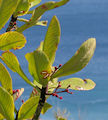
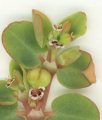
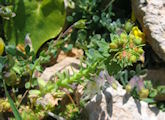
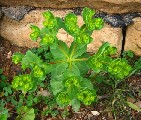
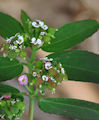
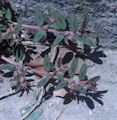
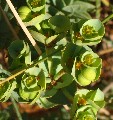
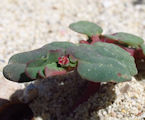
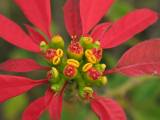
Family Description: Euphorbiaceae, commonly known as the spurge family, is one of the largest and most diverse families of flowering plants, encompassing around 7,500 species across approximately 300 genera. Members of this family exhibit remarkable morphological variety, ranging from tiny herbs to large trees, and even cactus-like succulents—many of which have evolved convergently to resemble true cacti.
Botanically, Euphorbiaceae species often possess alternate, simple leaves with stipules, though some may be lobed or compound. A distinctive feature in many genera is the presence of milky latex, which can be toxic and serves as a defense mechanism. The family includes both monoecious and dioecious species, with unisexual flowers that are typically small and lack petals. In the genus Euphorbia, flowers are arranged in a unique inflorescence called a cyathium—a cup-like structure that mimics a single flower but actually contains multiple reduced male and female flowers.
Fruits are usually schizocarps, which split explosively to disperse seeds. Economically, the family is significant: it includes Hevea brasiliensis (the rubber tree), Manihot esculenta (cassava), Ricinus communis (castor oil plant), and ornamental species like Euphorbia pulcherrima (poinsettia).
Family Description: Euphorbiaceae, commonly known as the spurge family, is one of the largest and most diverse families of flowering plants, encompassing around 7,500 species across approximately 300 genera. Members of this family exhibit remarkable morphological variety, ranging from tiny herbs to large trees, and even cactus-like succulents—many of which have evolved convergently to resemble true cacti.
Botanically, Euphorbiaceae species often possess alternate, simple leaves with stipules, though some may be lobed or compound. A distinctive feature in many genera is the presence of milky latex, which can be toxic and serves as a defense mechanism. The family includes both monoecious and dioecious species, with unisexual flowers that are typically small and lack petals. In the genus Euphorbia, flowers are arranged in a unique inflorescence called a cyathium—a cup-like structure that mimics a single flower but actually contains multiple reduced male and female flowers.
Fruits are usually schizocarps, which split explosively to disperse seeds. Economically, the family is significant: it includes Hevea brasiliensis (the rubber tree), Manihot esculenta (cassava), Ricinus communis (castor oil plant), and ornamental species like Euphorbia pulcherrima (poinsettia).
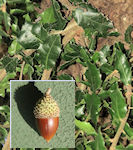
Family Description: Fagaceae, commonly known as the beech or oak family, is a prominent family of flowering plants within the order Fagales. It comprises about 8 genera and over 900 species, including ecologically and economically vital trees such as oaks (Quercus), beeches (Fagus), and chestnuts (Castanea).
Members of this family are typically deciduous or evergreen trees and shrubs, primarily distributed across the Northern Hemisphere. They are characterized by alternate, simple leaves with pinnate venation and often lobed or toothed margins. Stipules are usually present but fall off early. The flowers are unisexual and wind-pollinated, with male flowers often arranged in catkins and female flowers solitary or in small clusters.
The fruit is a nut enclosed in a cupule, which may be scaly or spiny. In oaks, this structure forms the familiar acorn cup, while in chestnuts, the cupule becomes a spiny husk enclosing multiple nuts. Fagaceae species are dominant components of temperate forests and play a crucial role in supporting biodiversity, offering food and habitat for countless organisms.
Family Description: Frankeniaceae consists primarily of small shrubs, subshrubs, or herbaceous perennials, often with a compact, cushion-like growth habit. Stems are typically rounded or slightly angled, sometimes swollen at the nodes, and may exhibit articulated segments. The leaves are opposite, simple, and exstipulate, often small and ericoid in form, with entire, revolute margins. Leaf pairs are frequently united at the base by membranous, sheathing stipular margins, often bearing stiff, white hairs. The leaf surface may be punctate with salt-excreting glands, which are sunken into epidermal pits and composed of specialized multicellular structures.
Inflorescences are usually terminal or axillary cymes, occasionally solitary, and are subtended by bracts that may be basally connate. Flowers are actinomorphic, bisexual, and hypogynous, with 4 to 7 persistent, ribbed sepals fused into a tubular calyx. Petals, equal in number to the sepals, are free, clawed at the base, and often bear a scale-like appendage on the adaxial face of the claw. Stamens typically number six, arranged in two whorls, and may be free or slightly connate at the base. The ovary is superior, unilocular, and formed from 1 to 4 fused carpels, with parietal placentation. The fruit is a capsule enclosed in the persistent calyx, dehiscing loculicidally, and contains small seeds with a straight embryo embedded in starchy endosperm.
Family Description: Gentianaceae, commonly known as the gentian family, is a cosmopolitan group of flowering plants within the order Gentianales, comprising about 105 genera and roughly 1,600 to 1,750 species. Members of this family are predominantly herbaceous, though some are subshrubs or small shrubs, and they are especially abundant in temperate and montane tropical regions.
Morphologically, Gentianaceae species typically exhibit opposite, simple leaves that are exstipulate and often sessile, with entire margins and bases that may be connate around the stem. The stems are usually herbaceous, sometimes rhizomatous, and may be erect or twining. Flowers are actinomorphic, bisexual, and hypogynous, often showy and brightly colored—especially in shades of blue, purple, or yellow. The calyx and corolla are gamosepalous and gamopetalous, respectively, usually with 4 or 5 lobes. Petals are twisted in bud, and nectar-secreting glands are often present at the base of the corolla.
The stamens are epipetalous and alternate with the corolla lobes, typically equal in number to the petals. The ovary is superior, unilocular, and formed from two fused carpels with parietal placentation. Fruits are usually septicidal capsules, though berries occur in a few species. Seeds are small, endospermic, and often oily, with a straight embryo.
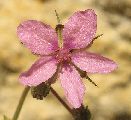
Family Description: Geraniaceae, commonly known as the geranium family, is a moderately sized family of flowering plants within the order Geraniales, comprising about 5 to 7 genera and approximately 830 species. The most prominent genera include Geranium (true geraniums or cranesbills), Pelargonium (commonly cultivated as garden geraniums), and Erodium (storksbills).
Members of this family are primarily herbs or subshrubs, with a few woody species. Leaves are typically simple or palmately compound, often lobed or dissected, and arranged alternately or oppositely. They are usually stipulate, and the stipules may be leaf-like or membranous. Leaf margins often bear glandular hairs, which can secrete aromatic or sticky substances.
The flowers are actinomorphic or slightly zygomorphic, hermaphroditic, and generally pentamerous, with five free sepals and five free petals. The androecium typically consists of 10 stamens, though some may be sterile (staminodes), and the gynoecium is syncarpous, formed from five fused carpels. The ovary is superior and develops into a distinctive schizocarp, which splits into five mericarps that remain attached to a central column, often forming a beak-like structure that aids in seed dispersal.
Geraniaceae flowers are often arranged in cymes or umbels and are primarily insect-pollinated. Their floral morphology and fruit structure are key diagnostic features within the family.
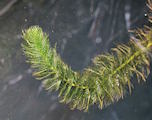
Family Description: Haloragaceae, commonly known as the watermilfoil family, is a small but morphologically diverse group of flowering plants within the order Saxifragales. It includes about 8 genera and roughly 100 species, with a distribution that spans temperate and subtropical regions, particularly in the Southern Hemisphere.
Members of Haloragaceae range from submerged aquatic herbs to woody shrubs and small trees. Leaves are typically alternate, opposite, or whorled, and in aquatic species like Myriophyllum, they are often finely dissected or pectinate, maximizing surface area for underwater photosynthesis. Stipules are generally absent, though some species may have small intravaginal scales.
The flowers are usually small, actinomorphic, and unisexual or hermaphroditic, borne singly or in inflorescences such as spikes or panicles. Floral parts are often in multiples of four, though variation exists. The perianth may be reduced or absent, especially in submerged taxa. Stamens typically number 2 to 8, and the ovary is inferior, composed of 2 to 4 fused carpels, each with a single ovule.
Fruits are diverse, including schizocarps, nuts, or drupes, often breaking into one-seeded segments. These adaptations reflect the family's ecological breadth—from aquatic to terrestrial habitats.
Family Description: Hydrocharitaceae, commonly known as the frog’s-bit family, is a diverse group of aquatic monocotyledonous flowering plants within the order Alismatales. The family includes about 18 genera and over 130 species, encompassing both freshwater and marine taxa. Members are distributed globally, with a strong presence in tropical and subtropical regions.
Morphologically, Hydrocharitaceae species range from submerged and floating herbs to emergent aquatics, often with creeping rhizomes or stolons. Leaves are typically simple, entire, and highly variable in shape—from linear and ribbon-like to orbicular—depending on habitat and genus. They may be arranged in whorls, spirals, or opposite pairs, and are often sessile or borne on petioles. Many species exhibit leaf dimorphism between submerged and aerial forms.
Flowers are usually unisexual and actinomorphic, though some are bisexual. They are borne singly or in inflorescences, often subtended by bracts or enclosed in a spathe-like structure. The perianth is composed of two or three whorls, with the inner segments often petaloid. Stamens range from one to numerous, and the inferior ovary is formed from 2 to 15 fused carpels with parietal placentation. Fruits are typically indehiscent berries or capsules, containing numerous seeds with straight embryos and no endosperm.
This family is notable for its specialized aquatic pollination mechanisms, including surface and underwater pollination, and for its ecological importance in aquatic ecosystems.
Saint John's Wort Family Conservative synonym: Guttiferae Includes Clusiaceae
Subfamalies: nil.
Family Description: Hypericaceae, commonly known as the St. John’s wort family, is a family of flowering plants within the order Malpighiales, comprising approximately 6 to 9 genera and up to 700 species. Members of this family are found worldwide, except in extremely cold or arid regions, with the genus Hypericum being the most widespread and well-known.
Morphologically, Hypericaceae species are typically herbs, subshrubs, or shrubs, either annual or perennial. Leaves are simple, entire, and arranged oppositely, often dotted with translucent or black glandular spots—features that are especially prominent in Hypericum perforatum. These glands may contain secondary compounds like hypericin, which are photosensitive and have pharmacological significance.
The flowers are actinomorphic, bisexual, and usually yellow, borne in cymose inflorescences. They typically have four or five persistent sepals and petals, with numerous stamens often grouped into fascicles. The ovary is superior, composed of three to five fused carpels, and the styles may be free or fused at the base. Fruits are usually dry, dehiscent capsules that split open to release numerous small seeds.
This family was once considered a subfamily of Clusiaceae but is now recognized as a distinct lineage, supported by both morphological and molecular evidence.
Family Description: Iridaceae, commonly known as the iris family, is a large and diverse group of monocotyledonous flowering plants within the order Asparagales. It includes around 66 to 80 genera and approximately 2,200 to 2,500 species, with a nearly global distribution but greatest diversity in southern Africa.
Members of Iridaceae are predominantly perennial herbs, though a few are evergreen or shrubby. They typically grow from underground storage organs—rhizomes, bulbs, or corms—which aid in vegetative reproduction and seasonal survival. Leaves are usually simple, linear to sword-shaped, with parallel venation and a characteristic equitant (overlapping) arrangement at the base. They are often isobilateral and lack petioles and stipules.
The flowers are actinomorphic or zygomorphic, bisexual, and trimerous, typically with six tepals arranged in two whorls. These may be free or fused into a tubular perianth. The androecium consists of three stamens, often epipetalous, and the gynoecium is inferior, tricarpellary, and syncarpous, forming a trilocular ovary with axile placentation. The fruit is usually a capsule, dehiscing to release numerous seeds, which may be winged or arillate.
Family Description: Isoetaceae, commonly known as the quillwort family, is a small but ancient group of vascular plants within the division Lycopodiophyta. The family is represented today by a single extant genus, Isoetes, comprising about 200 species found in freshwater habitats worldwide, particularly in lakes, ponds, and marshy soils.
Morphologically, Isoetes species are perennial, heterosporous lycophytes with a distinctive grass-like appearance. They grow from a short, lobed corm—a subterranean stem that anchors the plant and stores nutrients. From this corm arise numerous narrow, quill-like leaves, which are spirally arranged and hollow, each containing four longitudinal air canals. At the base of each leaf is a sporangium, partially or fully covered by a thin membranous tissue called the velum.
Reproduction is via megaspores and microspores, produced in separate sporangia on the same plant. This heterospory is a key evolutionary trait linking Isoetaceae to seed plants. The spores are released into water, where gametophytes develop and fertilization occurs.
Despite their modest appearance, Isoetaceae are considered living fossils, with a lineage dating back to the Paleozoic era. Fossil relatives once formed part of vast swamp forests, and today’s species retain many primitive features, offering valuable insights into early vascular plant evolution.
Family Description: Juglandaceae, commonly known as the walnut family, is a family of flowering plants within the order Fagales, comprising about 7 to 10 genera and approximately 50 species. This family includes economically and ecologically important trees such as Juglans (walnuts), Carya (hickories and pecans), and Pterocarya (wingnuts), with a native range spanning temperate regions of the Northern Hemisphere and extending into Central and South America.
Members of Juglandaceae are typically deciduous trees with large, aromatic, pinnately compound leaves, usually arranged alternately. The leaves often emit a strong scent when crushed due to the presence of essential oils and secondary metabolites. Stipules are absent, and leaflets are entire or serrate.
The plants are monoecious, bearing separate male and female flowers on the same individual. Male flowers are typically arranged in catkins, while female flowers are solitary or in small clusters. The fruit is a drupe-like nut, often enclosed in a husk derived from an involucre, which is not part of the ovary wall—making the fruit technically an accessory structure.
The wood of many species is prized for its strength and beauty, and the nuts are important food sources. Juglandaceae also plays a key role in forest ecosystems, supporting diverse wildlife and influencing soil chemistry through allelopathic compounds like juglone. 🌰🌳
Family Description: Juncaceae, commonly known as the rush family, is a group of monocotyledonous flowering plants within the order Poales. It includes about 8 genera and approximately 460 species, most notably the genus Juncus, which gives the family its name. These plants are widespread, especially in temperate and subarctic regions, and are often found in wetlands, marshes, and other moist or nutrient-poor habitats.
Morphologically, members of Juncaceae are herbaceous perennials or annuals, often with creeping rhizomes and erect, cylindrical or flattened stems. The leaves are typically basal or cauline, alternate, and tristichous (arranged in three vertical rows), with sheathing bases and often lacking a distinct blade. In some genera, like Luzula, the leaves are flat and bear long, silky hairs.
The flowers are small, actinomorphic, and bisexual, usually arranged in cymose inflorescences or dense heads. They possess six papery tepals in two whorls, often greenish, brown, or purplish, and six stamens (though this can vary). The ovary is superior, tricarpellary, and syncarpous, developing into a dry, dehiscent capsule that splits to release numerous small seeds.
Family Description: Juncaginaceae, commonly known as the arrowgrass family, is a small group of monocotyledonous flowering plants within the order Alismatales. It comprises about three genera—Triglochin, Cycnogeton, and Tetroncium—with roughly 30 to 35 species distributed across temperate and cold regions of both hemispheres, often in marshes, estuaries, and other wetland habitats.
Morphologically, members of Juncaginaceae are marsh or aquatic herbs with linear, sheathing basal leaves that are often grass-like in appearance. The stems are typically erect and unbranched, and the plants may form dense clumps or mats. The inflorescences are terminal spikes or racemes, bearing small, greenish, actinomorphic flowers. Floral parts are arranged in whorls of three, a typical monocot trait, with 3 or 6 stamens and 3 or 6 carpels. The ovary is superior, and the carpels may be free or partially fused.
The fruit is usually a capsule, dehiscing to release small seeds. These plants are wind- or water-pollinated and often exhibit adaptations for life in saturated soils, such as aerenchyma in their tissues for oxygen transport.
Family Description: Lamiaceae, also known as the mint family, is a large and diverse family of flowering plants within the order Lamiales, comprising around 236 genera and over 7,000 species. It is cosmopolitan in distribution, with a strong presence in temperate and subtropical regions, and includes many familiar culinary herbs, ornamentals, and medicinal plants.
Morphologically, members of Lamiaceae are typically aromatic herbs or shrubs, though some are trees or climbers. A hallmark feature is their square stems (quadrangular in cross-section), though this is not universal. Leaves are usually opposite and decussate, simple, and exstipulate, often bearing glandular hairs that secrete essential oils responsible for their characteristic scents.
The flowers are zygomorphic, bisexual, and hypogynous, typically arranged in verticillasters—dense, false whorls formed by paired cymes. The calyx and corolla are gamosepalous and gamopetalous, respectively, with the corolla often forming a bilabiate (two-lipped) structure. The androecium usually consists of four didynamous stamens (two long and two short), though reductions to two stamens occur in some genera. The gynoecium is bicarpellary and syncarpous, forming a deeply four-lobed ovary with a gynobasic style.
The fruit is typically a schizocarp, splitting into four nutlets. Economically important genera include Mentha (mint), Ocimum (basil), Rosmarinus (rosemary), Thymus (thyme), Salvia (sage), and Lavandula (lavender).
Family Description: Lauraceae, commonly known as the laurel family, is a diverse group of flowering plants within the
order Laurales, comprising approximately 50 genera and over 2,500 species. These plants are primarily
evergreen trees and shrubs, though a few are deciduous or even parasitic vines (e.g., Cassytha). The
family is widely distributed across tropical and subtropical regions, with a strong presence in
Southeast Asia, Central and South America, and parts of Australasia.
Morphologically, Lauraceae species typically have alternate, simple leaves that are leathery and
aromatic, often containing essential oil glands in the leaf tissue, bark, and wood. Stipules are
absent. The flowers are generally small, actinomorphic, and bisexual or unisexual, arranged in cymes,
panicles, or umbels. The perianth is undifferentiated, with 6 tepals in two whorls. Stamens are
numerous (usually 9 to 12), often with nectar-producing glands at their base, and the ovary is
superior and unilocular, formed from a single carpel.
The fruit is typically a drupe, often seated in a cup-like structure derived from the floral tube or
receptacle. Economically important members include Persea americana (avocado), Cinnamomum verum (true
cinnamon), Laurus nobilis (bay laurel), and Sassafras species.
Family Description: Liliaceae, traditionally known as the lily family, is composed primarily of herbaceous, perennial plants that often exhibit pronounced ornamental features. These plants typically possess specialized underground storage organs such as bulbs, corms, or rhizomes, which enable them to survive unfavorable periods and regenerate annually. The leaves are generally linear or strap-like, displaying parallel venation and a glossy, often glabrous surface. They frequently emerge in a basal rosette or alternate along an erect, unbranched stem, lacking conspicuous petioles.
The family is renowned for its showy flowers, which customarily exhibit a trimerous arrangement, with floral parts occurring in multiples of three. The perianth consists of six tepals—undifferentiated segments that are often brightly colored and arranged in two whorls of three, creating a visually striking display. The androecium is composed of six stamens, typically arranged in two whorls, featuring versatile anthers that release pollen with relative ease. Centrally positioned is a superior, trilocular ovary formed by three fused carpels that matures into a capsule or, in some cases, a berry, dispersing minute seeds.
Family Description: Linaceae, commonly known as the flax family, is a family of flowering plants within the order Malpighiales. The family is cosmopolitan, with a primary center of diversity in temperate regions, and it comprises roughly 14 genera and about 250 species. Traditionally, Linaceae is divided into two subfamilies: the Linoideae, which includes the well-known genus Linum (flax), and the Hugonioideae, sometimes recognized as the separate family Hugoniaceae, which tends to include woody vines, shrubs, or trees mainly in tropical areas.
Morphologically, plants in this family are usually herbaceous annuals or perennials, although a few are subshrubs or woody forms. The leaves are always simple and are most commonly arranged alternately, though in a few genera, they can be opposite or even whorled. Their flowers are typically small, actinomorphic, and pentamerous—possessing five free sepals and five free, often contorted petals. The androecium generally consists of ten stamens arranged in two whorls, with reductions (i.e., staminodes) in some taxa. The gynoecium is composed of two to five fused carpels forming a superior ovary with axile placentation, usually maturing into septicidal capsules that split open upon ripening.
Economically and historically significant, the genus Linum, particularly Linum usitatissimum (cultivated flax), is renowned not only for producing linen fiber but also for yielding linseed oil, which has diverse culinary and industrial applications.
Family Description: Lythraceae, commonly known as the loosestrife family, is a diverse family of flowering plants within the order Myrtales. The family encompasses around 31 genera and roughly 620–650 species, with members ranging from herbaceous plants and small shrubs to trees. They are predominantly found in warmer regions of both the Old and New Worlds, with particular diversity in South America, Africa, and parts of Asia.
Morphologically, Lythraceae species typically possess simple leaves arranged oppositely or in whorls, with entire margins and well-defined venation. Many members of the family display glandular hairs or other surface textures that can contribute to a distinctive aroma. The flowers are usually actinomorphic (radially symmetric) and bisexual, often featuring a well-developed hypanthium—an often cup-like structure at the base of the flower. A characteristic trait in the family is that the petals are crumpled while in bud, and they usually occur in multiples of four or six. Stamens tend to be numerous, frequently occurring in two whorls that are roughly twice the number of petals, and the superior ovary may exhibit axile placentation. The fruit is typically a dry, dehiscent capsule that splits open to release its seeds.
Family Description: Malvaceae, commonly known as the mallow family, is an extraordinarily diverse group of flowering plants within the order Malvales. This broadly circumscribed family now includes genera formerly placed in Bombacaceae, Tiliaceae, and Sterculiaceae—a change spurred by molecular phylogenetic studies that revealed these groups form a single monophyletic lineage.
Morphologically, members of Malvaceae exhibit a remarkable range in growth habit: they can be herbaceous annuals, perennial shrubs, or even towering trees. Leaves are generally alternate and simple, often displaying a palmate venation pattern and covered with stellate (star-shaped) or simple hairs that exude mucilage when crushed. A key diagnostic feature of many mallows is their showy, actinomorphic flowers typically structured in fives; most species possess 5 free sepals and 5 free petals. In several subfamilies—especially Malvoideae—the stamens are united by their filaments into a conspicuous staminal column that encircles the central style, a feature that greatly enhances the aesthetic appeal of these flowers. An additional floral element is the epicalyx, a whorl of bract-like structures that lies just outside the true calyx.
The superior ovary usually develops into a dehiscent capsule (often a schizocarp) that splits open to release several seeds. Economically and culturally, Malvaceae is significant, boasting notable species such as Gossypium (cotton), Theobroma cacao (cocoa), Hibiscus (ornamentals), and Abelmoschus esculentus (okra), among many others
Lavatera trimestris L. - Historically established synonym widely adopted in Maltese flora
Rose mallow, Annual mallow, Royal mallow
Ħobbejża tal-warda kbira
Apr-Jun
Normal Profile with
images.
MELIACEAE Juss.
Persian Lilac Family
Subfamalies: Cedreloideae, Melioideae
Family Description: Meliaceae, often known as the mahogany family, is a diverse and widespread group of flowering trees and shrubs most commonly found in tropical and subtropical regions. The family is primarily composed of woody plants that are generally evergreen, though a few species may be deciduous. Their leaves are typically pinnately compound and arranged alternately, with finely divided leaflets giving the foliage a graceful, lacy appearance.
The flowers tend to be modest in size and not overly showy, yet they possess a fascinating structure. They are usually organized in inflorescences such as panicles or cymes and feature a syncarpous, superior ovary—formed by the fusion of multiple carpels—which later develops into fruits that can be capsules or drupes. In many genera, the fruits are winged, a feature that aids in wind dispersal.
Economically, the family holds considerable significance. Timbers derived from genera like Swietenia and Cedrela have long been cherished for their beauty, durability, and use in high-quality furniture and construction. Equally noteworthy are species like Azadirachta indica, the neem tree, celebrated for its medicinal properties and natural pesticidal qualities, and Melia azedarach, known as chinaberry, which is often used as an ornamental tree in warm regions.
Family Description: Moraceae is a family of flowering plants in the order Rosales that encompasses approximately 40–50 genera and around 1,100 species. The family is notable for its predominantly woody members, which include trees, shrubs, and lianas. A defining characteristic of most Moraceae is the presence of a milky latex, exuded from laticiferous tissues when the plant is damaged, which likely functions as a deterrent against herbivores.
The leaves in Moraceae are generally simple and arranged alternately, with a range of shapes from entire to lobed and exhibiting pinnate venation. The inflorescences are often highly specialized and reduced, with individual flowers that are minute and inconspicuous. In genera such as Ficus, the flowers are enclosed within a syconium—a globose, hollow structure that acts as an inverted inflorescence—while in other genera, flowers may be aggregated in more open clusters. Many species exhibit unisexual flowers that can be arranged on the same plant (monoecious) or on separate individuals (dioecious), contributing to complex reproductive strategies.
The fruits of Moraceae are typically compound structures, resulting either from the fusion of multiple ovaries or from the development of a syncarpous fruit. These fruits can vary markedly in form, ranging from the fleshy mulberries of Morus to the large, segmented fruits of Artocarpus species. Collectively, these features highlight the evolutionary innovations of the family, which has successfully colonized a wide variety of ecological niches, particularly within tropical and subtropical regions, where members such as figs play a crucial role as keystone species in forest ecosystems
Family Description: Musaceae, commonly known as the banana family, is a family of flowering plants within the order Zingiberales that comprises approximately three genera—Musa, Ensete, and Musella. These plants are primarily large, herbaceous perennials that display a remarkably specialized growth habit. Instead of a true woody trunk, members of Musaceae form a pseudostem by tightly overlapping the basal sheaths of their large leaves, creating an appearance akin to a tree in many cases.
The leaves are simple, elongated, and often elliptical, exhibiting parallel venation typical of monocots. They are arranged alternately along the pseudostem, contributing not only to the plant’s impressive stature but also to its effective photosynthetic capacity. At the heart of Musaceae’s reproductive strategy lies an elaborate inflorescence that emerges from the center of the pseudostem. This inflorescence, often highly branched and conical or cylindrical in shape, bears numerous unisexual flowers arranged in a spiral pattern. Male and female flowers may occur in distinct zones within the inflorescence, which is an adaptation that enhances cross-pollination.
The fruit of Musaceae is a botanical berry, characterized by its soft, starchy pulp. In wild species, the berries usually contain numerous seeds; however, many cultivated varieties exhibit seedlessness due to parthenocarpy, a trait that is highly valued in agricultural production. Overall, Musaceae species are of immense economic and cultural importance, providing staple food sources in tropical regions and offering unique insights into the evolution and cytogenetics of monocotyledonous plants.
Family Description: Myrtaceae is a family of woody angiosperms in the order Myrtales that comprises a diverse array of trees, shrubs, and occasionally subshrubs. Members of the family are typically evergreen, with coriaceous leaves that are simple—often arranged alternately or occasionally in opposite pairs—and bear numerous essential oil glands. These oil-containing punctations give the foliage a distinctive aroma and are a diagnostic feature of the family.
The flowers are generally actinomorphic and bisexual, with a tendency toward a pentamerous arrangement in which the showy, imbricate petals are accompanied by a conspicuous number of stamens. In many species, the stamens form an outer ring that can be much more prominent than the petals themselves. The superior ovary is composed of free or partially fused carpels, and the resulting fruit may be a fleshy berry, a dry capsule, or sometimes a follicle, depending on the genus. Such morphological diversity in floral and fruit structures reflects the adaptive radiation and ecological versatility of the family, which has a broad distribution in tropical and warm-temperate regions.
Family Description: Nyctaginaceae, commonly known as the four o’clock family, exhibits several distinctive botanical features that set it apart within the Caryophyllales. The family is best recognized for its reduced, often inconspicuous true flowers that typically lack a distinct perianth. Instead, colorful and persistent bracts or bracteoles serve as the primary attractants for pollinators, lending the inflorescences a striking ornamental quality despite their underlying simplicity.
Vegetatively, species in Nyctaginaceae generally possess simple, alternate leaves that are frequently asymmetric and devoid of stipules. Their stems often display noticeable nodal swellings, contributing to the unique structural architecture of the plants. One particularly noteworthy reproductive adaptation is the development of an anthocarp—a structure in which the persistent perianth fuses with the fruit following fertilization. This modified fruiting mechanism aids in seed dispersal and enhances the family’s ecological success.
Family Description: Nymphaeaceae, commonly known as the water lily family, comprises a group of basal angiosperms adapted to aquatic habitats. The family includes genera such as Nymphaea, Nuphar, Victoria, Barclaya, and Euryale. Members are rhizomatous perennials rooted in the soft substrates of ponds, lakes, and slow-moving waters. Their large, peltate leaves, with petioles attached near the center of the blade, are ideally suited for floating on water, maximizing light capture and gas exchange.
The flowers are borne on long, erect peduncles that lift them above the water surface, enhancing pollinator access. Typically, the flowers are radially symmetric and hermaphroditic, with numerous free tepals arranged in a spiral. A central gynoecium, consisting of multiple free carpels, is surrounded by a profusion of stamens. In many species, protogyny helps reduce self-pollination. Once fertilized, the flower develops into a fruit, either a spongy berry or a cluster of achenes retained within a persistent receptacle that provides an efficient seed dispersal mechanism. These combined features illustrate the specialized evolutionary adaptations of Nymphaeaceae to life in an aquatic environmen
Family Description: Oleaceae, known as the olive family, is a group of woody angiosperms in the order Lamiales that includes both trees and shrubs with a worldwide distribution, particularly in temperate and subtropical regions. Members typically bear opposite, simple leaves that are often entire and exhibit a clear venation pattern, contributing to their distinctive silhouette. The flowers are generally bisexual and display a consistent symmetry, usually with four free sepals and four free petals, although some variations exist across the genera. Stamens commonly occur in a reduced number, sometimes partially fused, and the ovary is superior and bicarpellary, often forming a single compound structure. This floral organization gives rise to a variety of fruit types—from fleshy drupes, as seen in the olive (Olea), to dry capsules or samaroid fruits in other genera. Notable members of Oleaceae include Fraxinus (ash), Jasminum (jasmine), Forsythia, and Syringa (lilac), many of which are valued for their ornamental appeal, fragrance, or valuable wood products. The family’s diverse morphology and economic importance underscore its significant role in both natural ecosystems and human culture.
Family Description: Onagraceae, commonly known as the evening primrose or willowherb family, consists of roughly 650 species distributed among about 17 genera. These predominantly herbaceous plants, though some shrubs and small trees occur, are well adapted to a range of habitats from temperate woodlands to arid deserts and wetlands. The leaves are usually simple, alternately arranged, and can be lanceolate or ovate with entire or slightly toothed margins.
The floral structure is notably uniform within the family. Most species exhibit actinomorphic flowers with four free sepals and four free petals arranged in a regular pattern. Numerous stamens typically surround a central gynoecium, and in many members the ovary is inferior—a feature that significantly influences fruit development. Following pollination, the inferior ovary generally develops into a capsule that dehisces to release small, numerous seeds.
Family Description: Orchidaceae is one of the most diverse and morphologically remarkable families of angiosperms, comprising roughly 25,000 to 28,000 species distributed across nearly 900 genera. As monocots, orchids occupy a wide range of habitats—from tropical rainforests to temperate regions—and include terrestrial, epiphytic, and lithophytic forms. Their flowers, a hallmark of the family, are strikingly zygomorphic. Typically, an orchid flower consists of three outer sepals and three inner petals, with the median petal uniquely modified into an elaborate labellum that serves as an adaptable landing platform for their specific pollinators.
The reproductive apparatus is highly specialized; the stamens and style are fused to form a gynostemium, and pollen is aggregated into compact pollinia, which enhances the precision of pollen transfer. Orchid seeds are extremely minute and lack endosperm, rendering them reliant on symbiotic relationships with mycorrhizal fungi for germination. Diverse pollination strategies, ranging from nectar rewards to deceptive mimicry, have driven complex coevolutionary dynamics with their pollinators. These adaptive innovations place Orchidaceae at the forefront of studies in evolution, speciation, and ecological interactions in flowering plants.
Family Description: Orobanchaceae is a monophyletic family of parasitic angiosperms within the order Lamiales that exhibits remarkable evolutionary specialization. Most species in this family are obligate parasites that obtain water, nutrients, and organic compounds exclusively from their host plants through specialized structures known as haustoria. In hemiparasitic members, reduced chlorophyll may permit limited photosynthesis, whereas holoparasitic species often lack chlorophyll entirely and display highly diminished or absent foliage.
The vegetative parts are typically simplified; leaves may be reduced to scale-like structures or completely absent in more advanced parasites. Flowers tend to be small and bilaterally symmetrical, arranged in racemose, spike-like, or dichasial inflorescences. The floral organs are often modified, with a tubular or fusiform corolla sometimes divided into two distinct lips that aid in the attraction of specific pollinators. Following fertilization, the superior, typically capsular fruits dehisce to disperse a vast number of minute seeds—adapted for long-term survival in the soil seed bank. These morphological and reproductive adaptations underscore the extreme specialization of Orobanchaceae to a parasitic lifestyle.
Family Description: Oxalidaceae, commonly known as the wood sorrel family, comprises a small yet diverse group of flowering plants primarily exhibiting herbaceous or shrubby forms. Species within this family typically possess compound leaves arranged alternately, with leaflets that often feature swollen pulvini at their bases—specialized structures that facilitate nyctinastic movements in response to light and humidity changes.
The flowers of Oxalidaceae are generally small, actinomorphic, and pentamerous, exhibiting five free sepals and five free petals. Stamens usually number ten, arranged in two whorls, with the outer whorl often modified to include basal nectaries that enhance pollinator attraction. The superior ovary, following successful fertilization, develops into a fruit that may present as an explosive capsule or, in some genera such as Averrhoa, as a berry-like structure.
Family Description: Papaveraceae, the poppy family, is a morphologically distinctive group of eudicotyledonous flowering plants within the order Ranunculales. It comprises approximately 42 genera and around 775 species, primarily distributed across temperate regions of the Northern Hemisphere. Most members are herbaceous annuals or perennials, though a few are shrubs or small trees.
A hallmark feature of the family is the presence of laticifers—specialized cells that produce a milky or colored latex, often rich in alkaloids. Leaves are typically alternate, simple, and lobed or dissected, lacking stipules. The flowers are actinomorphic, bisexual, and hypogynous, often solitary and showy, with two or three caducous sepals and four to six crumpled petals. Stamens are numerous and free, arranged in concentric whorls, while the gynoecium is syncarpous, with a superior, unilocular ovary and parietal placentation.
Fruits are usually dry capsules that dehisce by pores (poricidal) or valves (valvular), releasing numerous small, often farinose seeds. Economically and pharmacologically significant species include Papaver somniferum (opium poppy), a source of morphine and codeine, and Eschscholzia californica (California poppy), valued ornamentally and medicinally.
Family Description: Passifloraceae, the passionflower family, is a diverse group of flowering plants within the order Malpighiales, comprising approximately 27 genera and around 750 species. Most members are herbaceous or woody vines, though the family also includes shrubs and small trees, particularly in tropical and subtropical regions.
A hallmark of Passifloraceae is its climbing habit, often facilitated by axillary tendrils. Leaves are typically alternate, simple or lobed, and often stipulate. The flowers are actinomorphic and bisexual, usually with five sepals and five petals, and often feature a prominent corona—an additional whorl of filamentous structures between the petals and stamens. The reproductive organs are borne on a stalk-like structure called an androgynophore, elevating the ovary and stamens above the base of the flower.
The ovary is superior and typically trilocular, maturing into a berry or capsule. Seeds are often arillate, aiding in animal-mediated dispersal. The genus Passiflora is the largest and most iconic, known for its intricate floral morphology and edible fruits like passionfruit (Passiflora edulis). This family exemplifies coevolutionary relationships, particularly with pollinators and herbivores, and plays a significant role in tropical ecosystems.
Family Description: Pedaliaceae, commonly known as the sesame family, is a small but morphologically distinctive group of flowering plants within the order Lamiales. It comprises about 13–16 genera and roughly 60–70 species, primarily distributed across tropical and subtropical regions of the Old World, especially Africa and parts of Asia.
Members of Pedaliaceae are typically annual or perennial herbs, occasionally shrubs, characterized by mucilaginous glandular hairs that give their stems and leaves a sticky or clammy texture. The leaves are usually opposite, simple, and exstipulate, often lobed or toothed. Flowers are zygomorphic and hypogynous, with a tubular, often bilabiate corolla formed from five fused petals. The androecium typically consists of four didynamous stamens, with a fifth staminode sometimes present. The bicarpellary ovary is superior and usually develops into a loculicidal capsule, often armed with spines, hooks, or wings that aid in seed dispersal.
The family is best known for Sesamum indicum, the cultivated sesame plant, valued globally for its oil-rich seeds. Other genera, such as Pedalium and Harpagophytum, are noted for their medicinal or ecological significance, often thriving in arid or semi-arid environments.
Family Description: Phytolaccaceae, commonly known as the pokeweed family, is a small group of flowering plants within the order Caryophyllales. The family includes a handful of genera—most notably Phytolacca—which showcase a range of growth habits from herbaceous perennials to woody shrubs and, in some cases, small trees. The leaves are typically arranged alternately or spirally, are simple with entire margins, and often exhibit a glabrous to sparsely pubescent texture.
Flowering structures in Phytolaccaceae are usually organized in racemes or occur singly within leaf axils. The flowers themselves are modest and actinomorphic, with a calyx composed of a few free sepals and a corolla that may be free or only slightly fused. The superior ovary develops into a fleshy, berry-like fruit that matures to reveal numerous small seeds—a feature that likely aids in vertebrate-mediated dispersal. Species in this family are adapted to a variety of habitats, ranging from moist woodlands to disturbed soils, illustrating both their ecological plasticity and evolutionary resilience.
Family Description: Pinaceae, commonly known as the pine family, is an influential group of coniferous gymnosperms within the division Pinophyta. Comprising about 11 genera and roughly 220–250 species, this family includes familiar trees such as pines (Pinus), spruces (Picea), firs (Abies), cedars (Cedrus), larches (Larix), hemlocks (Tsuga), and Douglas-firs (Pseudotsuga). Most members are evergreen, although genera like Larix and Pseudolarix are deciduous, an adaptation to seasonal climates. Their leaves are typically needle-like or, in some cases, scale-like, each modified with a thick cuticle to minimize water loss.
Reproductive structures are equally specialized. Pinaceae are monoecious, bearing distinct male and female cones on the same plant. The female cones are usually woody with spirally arranged scales, each often bearing two ovules, while the male cones, smaller and less conspicuous, release abundant wind-dispersed pollen. Resin production is a common trait, providing a natural defense against pathogens and herbivores. This combination of ancient evolutionary traits, efficient reproductive strategies, and adaptations to cold or dry conditions has allowed the Pinaceae to dominate boreal and montane forests, making them ecologically and economically significant
Family Description: Pittosporaceae is a small family of flowering plants within the order Apiales, comprising around nine genera and roughly 200–240 species. These plants are predominantly woody, manifesting as trees, shrubs, or twining lianas, and are chiefly distributed across warm temperate to tropical regions of the Old World, such as Australia, Southeast Asia, and the Pacific Islands.
Members of this family typically display evergreen foliage with simple leaves that are arranged alternately or in slight opposition. The leaves usually have entire margins and a leathery texture, with pinnate venation that lends structural clarity and durability in diverse habitats. The inflorescences are often compact, bearing actinomorphic flowers that exhibit pentamerous symmetry; each flower usually features five imbricate sepals and five free petals. Stamens are generally equal in number and do not markedly differ from one another in size or form. The superior ovary, composed of free carpels, gives rise to a fruit—often a capsule or a berry-like structure—that, upon maturation, releases seeds enrobed in a sticky exudate. This adhesive coating enhances seed dispersal by facilitating attachment to the fur or feathers of animals, thereby promoting the colonization of new areas.
Japanese mock orange, Shrubby putterlick, Japanese cheesewood
Pittosporum
Jun-Aug
Normal Profile with
images.
PLANTAGINACEAE Juss.
Plantain or Veronica Family Includes Callitrichaceae
Subfamalies: nil.
Family Description: Plantaginaceae is a diverse family within the order Lamiales that has undergone significant redefinition in recent decades. Traditionally, the family was more narrowly circumscribed, but modern phylogenetic studies have expanded its boundaries to include genera previously placed in Scrophulariaceae. Members of this family range from modest, ground-hugging herbs to more showy ornamental plants, and even some aquatic species.
The leaves are generally simple and arranged alternately or in basal rosettes, with shapes that can vary from linear to ovate and margins that are often entire. Many species exhibit a clear venation pattern that reinforces leaf structure. Inflorescences in Plantaginaceae are equally variable; some genera display solitary flowers while others feature dense clusters. A common trait among many is the presence of zygomorphic flowers, typically with a bilabiate (two-lipped) corolla that effectively channels pollinators toward the reproductive organs.
The floral parts usually include a calyx of four to five free sepals, and a corolla that may be partially fused into a tubular structure. The ovary is generally superior, and fruit development often results in a capsule that splits open to liberate numerous small seeds. This morphological versatility underscores the family’s evolutionary adaptability, contributing to its broad ecological distribution and its significance in both horticultural and medicinal contexts.
Family Description: Platanaceae is a monotypic family of flowering plants in the order Proteales, represented solely by the genus Platanus. This small family comprises roughly six to ten species of tall, deciduous trees native to temperate and subtropical regions of the Northern Hemisphere. A standout characteristic of these trees is their exfoliating bark, which peels away in irregular patches to reveal smooth, light-colored surfaces that contrast with the darker, rough outer bark—a feature that not only enhances their ornamental appeal but may also offer protection against environmental stresses.
The leaves are broadly lobed and arranged alternately along sturdy branches, bearing a resemblance to those of maple trees and forming a graceful, expansive crown. The trees produce dense clusters of minute, inconspicuous flowers that aggregate into globose inflorescences. Following pollination, these flowers yield small, wind-dispersed achenes equipped with fine hairs at the base, aiding in effective seed distribution. Notably, the hybrid London plane (Platanus × acerifolia) is widely planted in urban settings because of its exceptional tolerance to pollution and adaptability to challenging growing conditions.
Family Description: Plumbaginaceae, commonly known as the leadwort or plumbago family, is a cosmopolitan group of flowering plants placed within the order Caryophyllales. The family is primarily composed of perennial herbaceous species, though some members occur as shrubs or lianas. They typically inhabit arid or saline environments such as coastal steppes, salt marshes, and inland saline depressions, which has driven several unique morphological adaptations.
The leaves are usually simple with entire margins and often exhibit a succulent or leathery texture. A striking feature in many species is the presence of scattered chalk glands on the foliage that exude water and calcium salts, resulting in a characteristic whitish appearance. Inflorescences are generally bracteate and appear in racemes or cymose clusters. The flowers are actinomorphic, typically 5-merous, with a persistent, gamosepalous calyx often forming a tubular structure and free or slightly connate petals. Many species also display a disk of glandular structures alternating with the stamens, which usually number five and facilitate efficient pollen transfer.
Following fertilization, the superior ovary develops into a dry, often one-seeded achene that may be partly or wholly enclosed by the persistent calyx. This suite of morphological features highlights the family’s evolutionary adaptations to challenging environments and underpins its diverse ecological roles
Family Description: Poaceae, also known as the grass family (or Gramineae), is one of the largest and most ecologically and economically significant families of flowering plants. It is a family of monocots within the order Poales and comprises roughly 780 genera and about 12,000 species distributed across all continents except Antarctica.
Grasses typically exhibit an herbaceous habit, although there are woody members such as bamboos. Their stems, known as culms, are usually hollow between the nodes, where the leaves are attached. The leaves are generally narrow, linear, and arranged in two ranks (distichous). A specialized basal structure, the sheath, wraps around the culm, while the blade extends outward; many species also bear a small membranous projection called the ligule where the sheath meets the blade.
The reproductive structures of Poaceae are notably reduced and highly specialized. The flowers are arranged in compact units known as spikelets, typically containing several minute florets flanked by bracts (glumes). These modified floral parts protect the reproductive organs and are well adapted for wind pollination. The fruit is a caryopsis—a dry, one-seeded fruit in which the seed coat is fused to the pericarp—forming the basis of many global cereal crops.
Grasses are essential not only in natural ecosystems, where they form the dominant vegetation in prairies, savannas, and steppes, but also in agriculture. Staple crops such as rice, wheat, maize, barley, and millets belong to the Poaceae, providing a major source of dietary energy worldwide
Family Description: Polygalaceae, commonly known as the milkwort family, is a nearly cosmopolitan group of flowering plants within the order Fabales. The family comprises about 27 genera and roughly 900 species that include herbs, shrubs, trees, and lianas, thriving in a wide range of habitats from tropical forests to temperate regions.
A typical feature of Polygalaceae is the zygomorphic (bilaterally symmetrical) flower. In many species, one of the petals is modified into a distinct crest or keel, which is a key characteristic of the family and aids in specialized pollination strategies. The flowers generally possess five sepals and an equal number of petals, accompanied by 8 to 10 stamens arranged for efficient pollen transfer. Leaves are usually simple and alternately arranged, though their shape and texture can vary considerably between genera.
The fruit is most often a dehiscent capsule or, less frequently, a drupe, adapted for effective seed dispersal. The genus Polygala is notably diverse and constitutes over half of the family's species, underlining both its morphological variety and ecological adaptability.
Further exploration into this family reveals intriguing patterns of adaptation, from lianescent forms in moist understories to robust shrubs in drier regions, each contributing to its evolutionary narrative.
Family Description: Polygonaceae, commonly known as the smartweed or knotweed family, is a well‐defined group of flowering plants within the order Caryophyllales. The family encompasses roughly 1,200 species distributed among about 48 genera. Members of this family are primarily herbaceous, although shrubs, climbers, and even small trees are also represented. A distinctive feature of Polygonaceae is the ochrea—a sheathing, often membranous fusion of stipules that encircles the stem at the base of the leaf petiole. This morphological trait is considered diagnostic for many genera within the family.
The simple, alternately arranged leaves often bear entire to lobed margins, and they may sometimes exhibit a sour flavor due to the presence of oxalates. Flowers are typically small, with a generally cymose or racemose inflorescence, and are often trimerous (parts in threes) in some genera. Economically and ecologically important taxa include buckwheat (Fagopyrum esculentum), grown for both its edible seeds and flour, as well as various weedy species known for their persistence and competitive growth. The evolutionary success and global distribution of Polygonaceae underscore their adaptability to a range of temperate and subtropical habitats.
Family Description: Polypodiaceae is a diverse family of ferns within the order Polypodiales, predominantly found in tropical and subtropical regions—with several species extending into temperate habitats. Depending on the classification system, the family is circumscribed to include roughly 56–65 genera and an estimated 1,200–1,650 species. Some broader treatments of the group incorporate additional taxa formerly separated into families such as Grammitidaceae, resulting in what is sometimes termed a “megafamily” of polypod ferns.
Members of Polypodiaceae are most commonly epiphytic, often colonizing the trunks and branches of trees in humid forests, although terrestrial representatives occur as well. They typically exhibit creeping or climbing rhizomes densely covered with scales, which help secure the plants on their substrates. The fronds are usually pinnate or lobed, and their undersides carry clusters of sporangia arranged in sori. Notably, these sori generally lack a well-developed protective indusium; if present, any covering is more often formed by modified peltate scales rather than a continuous membrane. Such reproductive and vegetative traits are key to both the ecological success and the taxonomic evaluation of this fascinating fern family.
Beyond their ecological roles in forming integral components of forest canopies and understories, species in Polypodiaceae are also valued in horticulture for their aesthetic fronds and adaptability to a range of growing conditions.
Polypodium vulgare subsp. melitense Peroni, G.Peroni & Mifsud - Historically established synonym widely adopted in Maltese flora
Maltese polypody
Felċi ta\' Malta
Dec-Mar
Normal Profile with
images.
PONTEDERIACEAE Kunth
Water-Hyacinth Family
Subfamalies: Heterantheroideae, Pontederioideae
Family Description: Pontederiaceae is a small but distinctive family of aquatic flowering plants within the order Commelinales, part of the commelinid clade in the monocots. Adapted to life in tropical and subtropical waters, its members are primarily found growing in aquatic or semi-aquatic habitats. The family includes just two major genera—Pontederia and Heteranthera—comprising around 40 recognized species. A hallmark of many species in this family is heterostyly, in which flowers exhibit different style lengths to promote efficient cross-pollination. This specialized breeding mechanism, including the intriguing form known as tristyly, has historically attracted the attention of naturalists such as Charles Darwin.
Morphologically, plants in Pontederiaceae show clear adaptations to their watery environments. The leaves are typically free-floating or emergent, often featuring a basal sheath that anchors the plant in the water. Their inflorescences vary from solitary flowers to densely arranged clusters, with flowers that can be either actinomorphic or zygomorphic. The tepals—often exhibiting distinctive markings or coloration—aid in attracting pollinators, while the reproductive organs are organized to maximize pollen transfer. Following successful pollination, the superior ovary develops into a capsule or achene, structures well suited for dispersal by water currents. A well-known member of the family, the water hyacinth (Pontederia crassipes), has become notorious as an invasive species in many non-native regions, highlighting both the ecological importance and potential management challenges associated with these aquatic plants.
Beyond their ecological role in maintaining aquatic ecosystems, species in Pontederiaceae offer fascinating insights into the evolution of reproductive strategies and plant adaptations to waterlogged conditions.
Family Description: Portulacaceae, commonly referred to as the purslane family, is a group traditionally recognized for its succulent, herbaceous species in the order Caryophyllales. Historically, the family was thought to include up to 15 genera and around 500 species; however, modern molecular studies have greatly narrowed its circumscription so that it now essentially comprises only the genus Portulaca (with roughly 115 species). Plants in this redefined family typically feature fleshy, often glabrous leaves that form basal rosettes—a key adaptation for water storage in arid or saline environments. The flowers tend to be small and structurally simple, usually lacking distinct true petals. Instead, they often display petal-like sepals that are sometimes accompanied by a pair of green bracteoles, lending a subtle ornamental quality to the blooms.
Widely distributed in disturbed soils, open habitats, and even cultivated gardens, members of Portulacaceae are ecologically versatile. A well-known example is Portulaca oleracea, an edible species prized not only for its culinary uses—being a rich source of omega-3 fatty acids—but also for its medicinal properties. Despite the shifting boundaries in its taxonomic treatment (with many taxa formerly placed within Portulacaceae now reassigned to families such as Montiaceae, Didiereaceae, Anacampserotaceae, or Talinaceae), the distinctive succulence and adaptive morphology of these plants continue to underscore their evolutionary success in challenging, water-limited environments.
Family Description: Posidoniaceae is a monogeneric family of marine seagrasses classified within the order Alismatales of the monocots. The family comprises the genus Posidonia, which includes around nine species distributed primarily in the Mediterranean Sea and along the southern coasts of Australia. These robust, perennial herbs form extensive underwater meadows through their branching, fibrous rhizomes that securely anchor them in sandy or muddy substrates. Their long, narrow, ribbon-like leaves, emerging in dense basal rosettes, are finely adapted to maximize light capture in the dimly lit underwater environment.
The reproductive strategy of Posidoniaceae is equally specialized. The flowers are reduced and actinomorphic, an adaptation for hydrophilous pollination, with their modest floral parts ensuring successful fertilization under water. Following pollination, the plants produce fruits that facilitate seed dispersal within localized areas, contributing to the longevity and resilience of their meadows. These underwater habitats play a critical ecological role—not only do they protect coastal zones from erosion and provide food and shelter for diverse marine life, but they also contribute to water quality by oxygenating and stabilizing the marine substrate.
Family Description: Potamogetonaceae, commonly known as the pondweed family, is an aquatic group of monocotyledonous flowering plants within the order Alismatales. The family comprises roughly 110 to 120 species distributed among about five genera—with Potamogeton being by far the largest and most well-known. These perennial aquatic herbs are key components in freshwater ecosystems, where they contribute significantly as habitat and food sources for fish and invertebrates .
Members of Potamogetonaceae display a notable degree of morphological versatility adapted to aquatic life. Their leaves can appear in two distinct forms: thin, flaccid leaves that remain submerged and thicker, more rigid leaves that float on the water’s surface. These leaves are typically arranged alternately or sometimes oppositely along flexible stems and are often associated with stipules—small outgrowths at the base of the petiole. Such dual leaf forms within a single species allow the plants to optimize both underwater photosynthesis and exposure to aerial light when conditions allow.
The reproductive structures are equally fascinating. The flowers are generally small, bisexual, and inconspicuous, arranged in spike-like or racemose inflorescences. Typically, a flower possesses four tepal-like appendages, four stamens, and four carpels that are united to form a superior ovary. In some cases, variations exist, including unisexual flowers or differences in the presence of tepals. After pollination, the ovaries mature into fruit that is often described as an achene-like drupe, an adaptation that facilitates seed dispersal in aquatic environments.
The ecological significance of Potamogetonaceae cannot be overstated—they not only stabilize sediments and improve water clarity but also provide essential habitat structure in freshwater systems. Their sensitivity to changes in water quality also makes them important bioindicators for aquatic ecosystem health.
Family Description: Primulaceae, commonly known as the primrose family, is a widespread group of flowering plants now classified within the order Ericales. The family, as recognized in its modern sense, comprises around 58 genera and nearly 2,600 species distributed worldwide—from temperate and alpine regions to subtropical environments. Members of Primulaceae include herbaceous perennials, annuals, and even some shrubs or small trees. Many species form basal rosettes of simple leaves that are often alternate and bear toothed or entire margins.
A distinctive feature of the family is seen in its floral morphology. Flowers are typically bisexual and can display either actinomorphic or zygomorphic symmetry. They often exhibit a sympetalous (fused) corolla, and many species are haplostemonous—meaning the number of stamens equals the number of petals, with stamens usually positioned opposite the petals. The flowers generally lead to the formation of a superior ovary with free central placentation, and the fruit is commonly a capsule that releases numerous small seeds upon dehiscence.
Advances in molecular phylogenetics have led to notable taxonomic revisions, with several groups (such as those formerly treated as Maesaceae, Myrsinaceae, and Theophrastaceae) being subsumed into a broader circumscription of Primulaceae (sometimes referred to as Primulaceae sensu lato). Despite these changes, many of the traditional morphological features—like the basal leaf rosette and the characteristic floral traits—remain central to identifying members of the group. Genera such as Primula (the true primroses) and Cyclamen are not only key to the family’s diversity but also hold significant ornamental and, in some cases, medicinal value.
Beyond their horticultural appeal, primrose species play important ecological roles. They often act as pioneer plants in disturbed habitats and contribute to the biodiversity of flora in woodland edges, meadows, and rocky outcrops. Their seasonal blooms are an early herald of spring, making them a subject of both scientific interest and cultural significance
Family Description: Psilotaceae is a fascinating family of ferns (class Polypodiopsida) that has long intrigued botanists due to its seemingly primitive morphology. Traditionally regarded as relics of early vascular plants, members of this family have since been reinterpreted as highly derived ferns showing extreme reduction in their body plan. The family is placed in the order Psilotales and is composed of two distinct genera: Psilotum and Tmesipteris, together encompassing roughly a dozen species.
A hallmark of Psilotaceae is the absence of true roots and leaves. In the genus Psilotum, the plants are composed of slender, dichotomously branching stems with minute scale-like appendages known as enations—structures that resemble leaves but lack vascular tissue. In contrast, Tmesipteris species have more apparent, flattened phylloclades (leaf-like stems), yet still deviate from the typical fern morphology. Another distinctive feature is the formation of synangia, where multiple sporangia become fused together into compact reproductive structures, a trait that has fueled many discussions regarding their evolutionary relationships.
Ecologically, members of the Psilotaceae are found in tropical and subtropical regions—often in exposed, rocky habitats or as epiphytes in moist forest understories. Their simplified structure and unique adaptations provide a living window into the evolutionary processes that shaped early vascular plants, while modern molecular studies have firmly placed them among the ferns. This blend of ancestral features and derived specializations makes Psilotaceae a captivating subject for those interested in plant evolution and functional morphology.
Family Description: Pteridaceae is a large and diverse family of ferns in the order Polypodiales, comprising roughly 1,150 recognized species distributed among about 45 genera (though numbers may vary with different taxonomic treatments). Members of this family exhibit a remarkable range of ecological adaptations, thriving in habitats as varied as tropical rainforests, seasonally dry areas, rock crevices, and even some semi‐arid environments.
Characteristic features of Pteridaceae include creeping or erect rhizomes and typically compound fronds that are either pinnate or bipinnate. One diagnostic trait is the arrangement of sporangia: they are usually borne along the margins of the leaf (a feature known as marginal sori) and are often covered by a false indusium—a protective flap formed by the reflexed margins of the frond, rather than a true, dedicated indusium. The spores themselves are mostly tetrahedral in shape and are dispersed by wind, contributing to the wide distribution of these ferns.
Taxonomically, the family has historically been divided into several distinct groups—such as the adiantoid, cheilanthoid, pteridoid, and hemionitidoid ferns—that some botanists have suggested merit recognition as separate families. However, modern molecular studies tend to group these clades within a broadly defined Pteridaceae, even as ongoing research continues to refine our understanding of their evolutionary relationships.
Family Description: Ranunculaceae, commonly known as the buttercup or crowfoot family, is a diverse group of flowering plants that includes over 2,000 species distributed in roughly 40 to 60 genera. The family encompasses well-known genera such as Ranunculus (buttercups), Aconitum (monkshoods), Delphinium (larkspurs), and Clematis (woody climbers and vines).
Members of the Ranunculaceae are predominantly herbaceous, although some are climbers or even shrubs. Their leaves are typically alternate, simple or lobed, and often lack stipules. The flowers usually have free, distinct sepals and petals with numbers commonly in the range of four or five, while many species exhibit numerous stamens and carpels. In several genera, the floral symmetry can vary; for instance, while many flowers are radially symmetrical, genera such as Aconitum and Delphinium display zygomorphic (bilaterally symmetrical) flowers. The fruit is generally an aggregate of achenes or follicles, releasing many tiny seeds upon dehiscence.
A notable aspect of the family is the presence of various toxic compounds—protoanemonin in many buttercups and aconitine in monkshoods—which serves as a defense against herbivores. Such chemical traits, along with their evolutionary history (often considered basal among the eudicots), make Ranunculaceae of particular interest to evolutionary biologists and ecologists alike.
Family Description: Resedaceae, commonly known as the mignonette or reseda family, is a small group of predominantly herbaceous plants in the order Brassicales. The family is composed of roughly 80 to 107 species grouped into about 8 to 12 genera, with Reseda being the most well-known and widely studied genus.
These plants are usually annual or perennial herbs—and in some cases, small shrubs—characterized by simple, alternately arranged leaves. Many members bear glandular hairs on their foliage that secrete a sticky, resinous substance, a trait that can impart a distinctive aroma and may serve in defense. The flowers tend to be modest in size and are often arranged in dense spikes or clusters. Although not showy, their intricate floral structures and the subsequent formation of capsules that release multiple seeds highlight subtle reproductive adaptations suited to their typically dry, rocky, or disturbed habitats.
Geographically, Resedaceae species are largely distributed across temperate and Mediterranean regions of Europe, western Asia, and North Africa—with some species also occurring in parts of North America. Recent molecular studies have further refined our understanding of the family's relationships, indicating that some genera might be nested within others, which has implications for their taxonomic revision and classification
v
Family Description: Rhamnaceae, commonly known as the buckthorn family, is a significant group of flowering plants classified within the order Rosales. The family comprises approximately 55 to 60 genera and around 900 to 950 species distributed worldwide, although its members are particularly abundant in subtropical and tropical regions.
Members of Rhamnaceae are typically trees, shrubs, or climbing plants. Their leaves are generally simple and arranged alternately (or less frequently oppositely) and often bear stipules that, in certain genera, may develop into spiny structures providing a defensive function. The flowers tend to be small and radially symmetrical, featuring five separate sepals and five free petals, with stamens usually numbering in a similar range. A notable floral characteristic in many members of this family is the presence of an intrastaminal disk, which can be an important taxonomic marker.
The fruits of Rhamnaceae are diverse—ranging from drupes and berries to, in some cases, nuts—and are frequently adapted for animal-mediated dispersal. Several species in the family, such as those in the genus Ziziphus, produce edible fruits (e.g., the Chinese jujube) and have economic significance, not only in agriculture but also in traditional medicine and timber production. The bark of certain species, like Rhamnus purshiana, has been historically used to produce cascading sagrada, a natural laxative.
Ziziphus zizyphus (L.) H.Karst. - Historically established synonym widely adopted in Maltese flora
Jujube, Chinese date
Żinżel
May-Jun
Normal Profile with
images.
ROSACEAE L.
Rose Family
Subfamalies: Rosoideae, Dryadoideae, Maloideae
Family Description: Rosaceae, commonly known as the rose family, is one of the largest and most economically and ornamentally important families of flowering plants. The family is estimated to include around 4,800 species distributed in over 90 genera, though these numbers can vary among different sources.
Members of Rosaceae display a remarkable diversity of growth forms, including herbaceous perennials, shrubs, trees, and climbers. A defining feature of the family is its floral structure: most flowers possess five free sepals and five free petals arranged around numerous stamens and a central carpel. Additionally, many genera exhibit a hypanthium—a cup-like fusion of the basal parts of the sepals, petals, and stamens—that plays a significant role in the development of various fruit types.
Traditionally, Rosaceae has been divided into several subfamilies based primarily on the type of fruit produced. For example, the Amygdaloideae (sometimes referred to as Prunoideae) include species that form drupes such as peaches and cherries; the Maloideae comprise pomes like apples and pears; whereas the Rosoideae are characterized by aggregate fruits such as raspberries, strawberries, and roses. Recent phylogenetic studies have led to ongoing revisions and alternative classification schemes, reflecting the complex evolutionary history of the family.
Economically, the impact of Rosaceae cannot be overstated—it provides many of the fruits that are cornerstones of global agriculture and also contributes extensively to horticulture and landscaping with ornamental plants such as roses and flowering cherries. This combination of ecological versatility, evolutionary innovation, and cultural significance marks Rosaceae as a family of enduring interest to botanists and plant enthusiasts alike.
Family Description: Rubiaceae, commonly known as the coffee, madder, or bedstraw family, is one of the largest families of flowering plants within the order Gentianales. With roughly 13,500 species grouped into about 600 genera, this family is especially diverse in tropical and subtropical regions, though its members also thrive in temperate habitats.
Members of Rubiaceae are typically recognized by their simple, opposite or whorled leaves and the characteristic interpetiolar stipules—small, often fused outgrowths situated between the leaf petioles. The flowers are generally small, actinomorphic (radially symmetrical), and arranged in clusters such as cymes or heads. They usually feature a tubular or funnel-shaped corolla with an inferior ovary, a combination of traits that is key to distinguishing this family from others. The diversity in growth forms—ranging from trees and shrubs to lianas and herbaceous plants—complements the remarkable ecological adaptability of the group.
Economically and culturally, Rubiaceae is hugely significant. The genus Coffea supplies the coffee that energizes millions worldwide, while species of Cinchona have historically provided quinine, a critical treatment for malaria. Ornamentals like Gardenia and Ixora further underscore the family's influence across horticulture and traditional medicine. This blend of ecological versatility, striking morphology, and economic importance makes Rubiaceae a focal group in both botanical research and practical applications
Family Description: Ruppiaceae is a small, specialized family of aquatic monocots that is represented almost exclusively by the single extant genus Ruppia, commonly known as widgeonweeds or ditchgrass. These submerged or partially emergent herbs typically flourish in fresh to brackish waters, where their streamlined, delicate morphology is perfectly suited to an aquatic lifestyle.
Morphology and Reproductive Biology
Ruppiaceae species are usually annual (and less often perennial) plants with slender, dichotomously branching stems. The leaves are linear or sometimes bristle-like, often reduced in size and arranged alternately or in a whorl around the stem. Their structure is adapted to an underwater environment with fibrous roots emerging from the lower nodes to secure the plants in soft, often silty substrates. The minute, inconspicuous flowers are borne on short, terminal racemes and are typically perfect (bisexual) with a reduced perianth. Once fertilized, these flowers give rise to small, often drupaceous fruits that protect their single, nonendospermic seed, facilitating dispersal by water currents.
Ecological Significance
Occupying fresh and brackish habitats, members of Ruppiaceae play a crucial ecological role in stabilizing sediments and providing microhabitats for a variety of aquatic organisms. Their presence is often a good indicator of water quality and ecosystem health. The specialized adaptations of these plants highlight a unique evolutionary trend among aquatic flora, marking them as important subjects for ecological and taxonomic studies.
Family Description: Rutaceae, commonly known as the rue or citrus family, is a diverse and economically significant group of flowering plants in the order Sapindales. The family is thought to include around 160 genera and roughly 2,000 species, although numbers can vary depending on the classification system.
Morphology and Chemistry
Almost all members of Rutaceae are aromatic, a trait that stems from the abundant oil glands on their leaves. These glands confer a distinctive fragrance and flavor to many species, most notably the members of the genus Citrus. The leaves themselves can be either simple or compound and are usually arranged oppositely. Flowers tend to be small, actinomorphic (radially symmetrical), and often exhibit 4- or 5-merous parts. The stamens and carpels are arranged in configurations that, along with the presence of pellucid oil glands, serve as key diagnostic features of the family.
Reproductive Structures and Fruit Diversity
Rutaceae displays a remarkable variety of fruit types. For instance, the hesperidium of citrus fruits (like oranges, lemons, and grapefruits) is a specialized berry with a thick, aromatic rind, while other genera produce fruits in the form of capsules, drupes, or berries. This diversity is reflective of the varied ecological strategies the family has evolved, ranging from insect pollination in many temperate members to adaptations that enhance seed dispersal through animal-mediated mechanisms in tropical species.
Economic and Ecological Importance
The economic relevance of Rutaceae is considerable. The genus Citrus alone contributes extensively to global agriculture and international trade, offering popular fruits that are rich in vitamin C and other nutrients. Beyond food, several species are valued in traditional medicine, perfumery, and even as ornamental plants. The chemicals produced by Rutaceae species, such as essential oils and other secondary metabolites, have been studied for their bioactive properties, highlighting the family’s importance in both applied and fundamental botanical research.
Rutaceae’s combination of aromatic foliage, diverse morphological features, and varied fruit types makes it a fascinating family for understanding plant evolution, chemical ecology, and the interplay between plant form and function.
Family Description: Salicaceae, commonly known as the willow family, has long been recognized for its classic genera such as Salix (willows) and Populus (poplars). Recent molecular research, however, has broadened the family considerably so that it now includes around 56 genera and approximately 1,200–1,220 species. These plants are primarily woody, appearing as deciduous trees and shrubs in temperate regions and as evergreen species in many tropical habitats. Their leaves are generally simple and arranged alternately, with many showing serrated margins and the distinctive “salicoid tooth,” where a principal vein extends into the tip of a serration with an associated glandular seta.
The flowers of Salicaceae are typically small, reduced, and adapted to wind pollination, often arranged into catkins in species like willows. The fruits tend to be capsules that split open to disperse numerous tiny seeds, a feature that, coupled with clonal reproduction seen in some groups (such as the long-lived aspen clones), highlights the adaptive strategies of these plants. Ecologically, members of Salicaceae are crucial for stabilizing riverbanks and riparian zones, acting as pioneer species in disturbed areas and contributing to overall ecosystem health. Economically, the family’s importance is underscored by products such as salicin—originally derived from willows—which played a key role in the development of aspirin, alongside their uses in traditional medicine, forestry, and landscape architecture.
Family Description: Salviniaceae is a family of heterosporous aquatic ferns in the order Salviniales, comprising two genera—Azolla and Salvinia—and totaling around 20 species. These ferns are specially adapted to a floating lifestyle in tropical and subtropical regions. They exhibit highly modified, often bilobed leaves that facilitate both aerial photosynthesis and submerged functions; for example, some species display one green, photosynthetic lobe on the upper surface and a more delicate, often translucent or reduced lower lobe.
A key feature of this family is heterospory, meaning that they produce two different types of spores—megaspores and microspores—as part of their reproductive cycle. Their reproductive organs are enclosed in hardened sporocarps, which provide protection and aid in the controlled release of spores when environmental conditions are favorable. In addition to these characteristics, there is an intriguing ecological partnership in some Azolla species, which form symbiotic relationships with nitrogen-fixing cyanobacteria. This association not only enhances the fern’s growth in nutrient-poor waters but has also found practical applications in agriculture, notably in rice paddies where the ferns contribute to natural nitrogen enrichment.
This blend of reproductive innovation, specialized morphology, and ecological significance makes Salviniaceae a fascinating example of adaptation to aquatic environments.
Botanical Name
Common Name
Maltese Name
Flowering Period
Thumbnail Picture
Profile Type
SANTALACEAE R. Br.
Sandalwood Family
Subfamalies: nil.
Family Description: Herbaceous or woody plants. Leaves alternate, simple, linear, oblong or lanceolate, exstipulate, deciduous or evergreen. Flowers small, hermaphrodite or unisexual. Perianth 3- to 5-lobed or -partite, tubular to campanulate-rotate. Stamens 3-5, opposite lobes of the perianth. Ovary inferior, 1-celled. Style 1; stigma capitate or lobed. Fruit a small green nut or a drupe. Seed solitary, with abundant endosperm. Hemiparasites, growing on the roots of herbs or shrubs.
Family Description: Sapindaceae, commonly known as the soapberry family, is a diverse group of flowering plants in the order Sapindales. The family includes roughly 140 genera and nearly 1,900 species distributed across tropical, subtropical, and temperate regions. Its members display a remarkable variety of growth forms, ranging from trees and shrubs to lianas and even some herbaceous plants. In tropical species, leaves are often spirally alternate and pinnately compound, while several temperate representatives—such as those in the genera Acer (maples) and Aesculus (horse chestnuts)—exhibit opposite or palmately compound leaf arrangements, with a characteristic swollen petiole base and an absence of stipules.
Flowers in Sapindaceae are typically small and may be unisexual or functionally unisexual, often arranged in cymes, panicles, or racemes. Despite their diminutive size, the floral structures are finely tuned for insect pollination, with a consistent arrangement of petals and sepals in many species. The fruits produced by this family are equally varied, including fleshy berries, dry capsules, and winged samaras, each serving to optimize dispersal mechanisms—from animal ingestion to wind distribution.
Economically and culturally, Sapindaceae is significant. Many species are valued ornamentals, and several provide fruits that are integral to culinary traditions in different parts of the world, such as lychee and longan. Moreover, some members have been studied for their bioactive compounds, including saponins and latex, which have found uses in traditional medicine and various industrial applications. Modern molecular research has further refined the family's boundaries, merging previously separate groups like Aceraceae and Hippocastanaceae, which has deepened our understanding of its evolutionary history and ecological roles.
Family Description: Saxifragaceae is a family of flowering plants that, following modern molecular studies, is now understood to include around 35 genera and roughly 640 species. These are predominantly herbaceous perennials native to temperate regions, many of which inhabit rocky or alpine habitats where they frequently form basal rosettes of simple or lobed leaves. Historically, the family was defined much more broadly, including a diverse array of taxa that have since been reclassified based on genetic evidence.
The flowers in this family are typically small and radially symmetrical, usually featuring five sepals and five petals—often with their bases fused to form a hypanthium. The fruit is generally a dry capsule that dehisces to release numerous tiny seeds, an adaptation that aids survival in challenging environments. Many saxifrage species are popular in rock gardens and natural landscapes due to their attractive foliage and delicate blooms, underscoring both their ecological and horticultural value.
Family Description: Scrophulariaceae, commonly known as the figwort family, comprises a group of flowering plants that include herbaceous species and shrubs, many of which are valued for their ornamental or medicinal properties. Traditionally, this family was defined very broadly—encompassing hundreds of genera and several thousand species—but modern molecular studies have led to a substantial narrowing of its circumscription. Today, the family is recognized as including roughly 60 to 70 genera with around 1,800 species, while many genera previously assigned to it have been transferred to other families such as Plantaginaceae and Orobanchaceae.
Members of Scrophulariaceae typically exhibit zygomorphic (bilaterally symmetrical) flowers with fused petals, often arranged in clusters. The flowers usually bear a characteristic structure, sometimes with a two-lipped appearance, and most species have four stamens, though the number can vary. The leaves are generally opposite or occasionally alternate, and they often lack stipules. These traits, combined with a variety of growth forms and habitat adaptations—from woodland margins to alpine rocky outcrops—reflect the evolutionary diversity and ecological breadth of the group.
The current understanding of Scrophulariaceae underscores the complexity of plant systematics, illustrating how molecular phylogenetic techniques can refine classifications that were once based solely on morphologic characteristics. Despite the taxonomic reshuffling, several genera in the remaining Scrophulariaceae continue to be subjects of botanical and pharmacological interest. This rich evolutionary history and the ongoing refinement of the family’s boundaries make Scrophulariaceae a fascinating example of plant diversity and adaptation.
Family Description: Selaginellaceae is a family of lycophytes that is represented solely by the genus Selaginella, which includes over 700 recognized species distributed worldwide. These plants are often referred to as spikemosses and are distinguished by their scale-like microphylls that typically bear a small, cup-like structure known as a ligule. Unlike clubmosses in Lycopodiaceae, members of Selaginellaceae are heterosporous, producing two distinct sizes of spores—megaspores and microspores—which is a key adaptation in their reproductive cycle.
Many species in this family exhibit striking ecological adaptations; for example, Selaginella lepidophylla, commonly called the resurrection plant, can survive extended periods of drought by curling into a tight ball and reviving rapidly when moisture returns. Fossil evidence suggests that the lineage of modern Selaginella extends back over 300 million years to the Late Carboniferous, underscoring its ancient origin and remarkable evolutionary persistence.
Family Description: Simaroubaceae, commonly known as the quassia family, comprises a small, predominantly tropical group of trees and shrubs within the order Sapindales. The family is generally recognized as including about 20 genera and roughly 110 species, though these numbers can vary with ongoing taxonomic revisions. Many members are characterized by their bitter-tasting bark, which reflects the presence of quassinoids and other bioactive secondary compounds used in traditional medicine and as natural insecticides.
Plants in this family typically exhibit alternate, often compound leaves with glandular features and a conspicuous pith in the twigs. Their small, clustered flowers develop into fruits that are usually samaroid or drupaceous in nature—a trait that aids in wind dispersal. Among the notable genera is Ailanthus, with its well-known Ailanthus altissima (tree-of-heaven) that has become an invasive species in many urban environments, while genera such as Simarouba, Quassia, and Picrasma further illustrate the family's diversity.
Recent molecular phylogenetic studies have clarified many of the taxonomic debates surrounding Simaroubaceae, integrating chemical, morphological, and genetic data to provide a more stable classification of the group.
Tree-of-heaven, Stinking shumach, Japanese varnish tree
Xumakk falz
May-Jul
Normal Profile with
images.
SMILACACEAE Vent.
Catbrier Family
Subfamalies: nil.
Family Description: Smilacaceae is a family of flowering plants commonly known as the greenbrier family, and it is essentially represented by a single genus, Smilax. While older classifications recognized two genera (with Heterosmilax often segregated), modern molecular studies have merged them into Smilax, which now comprises around 210 species. These plants are generally climbing or twining vines with stems that are often armed with prickles or spines, aiding their ability to scramble through other vegetation.
The leaves are usually simple and alternate, typically showing parallel venation with reticulate patterns between the main veins in some species—a feature that sets them apart from many other monocots. Small, unisexual flowers are borne in clusters or umbels, and the fruit usually develops as a berry containing one to a few seeds. A notable characteristic is the pair of tendrils present near the base of the petiole, which assists in their climbing habit.
Found across tropical and warm-temperate regions worldwide, members of Smilacaceae inhabit a range of environments from dense forest understories to more open, rocky areas. Their distinctive morphology and ecological versatility have made them an interesting subject for both botanical research and horticultural observation.
Family Description: Solanaceae, commonly known as the nightshade or potato family, is a large and diverse group of flowering plants found across most regions of the world. The family includes roughly 2,700 species distributed among around 100 to 120 genera, though these numbers can vary between sources. Many of its members are of significant economic, medicinal, and ornamental importance. For example, staple food crops such as tomatoes, potatoes, eggplants, and peppers belong to this family, as does tobacco, which has long been valued for its stimulating alkaloids, and petunias that brighten gardens with their colorful blooms.
Plants in Solanaceae typically exhibit simple, alternate leaves that are often devoid of stipules. Their flowers are generally arranged with pentamerous symmetry—featuring five sepals and five petals that are frequently fused at the base—accompanied by a variable number of stamens. The fruits vary widely, ranging from berries in species like tomatoes and eggplants to capsules in other groups. A notable chemical feature of many solanaceous plants is their production of alkaloids, which can render them toxic (as in belladonna or jimsonweed) while also offering properties harnessed for medicinal uses.
Family Description: Tamaricaceae, the tamarisk family, is a small group of flowering plants placed within the order Caryophyllales. The family is composed of four genera—commonly recognized as Tamarix, Reaumuria, Myricaria, and Myrtama—with species counts that vary among different sources (ranging roughly from 80 to over 100 species). These plants are well adapted to arid and saline environments in regions stretching across Europe, Asia, and Africa.
Members of Tamaricaceae typically grow as shrubs or small trees and possess scale-like, overlapping leaves that minimize water loss—a crucial adaptation for survival in dry conditions. Many species have evolved mechanisms to tolerate high salt levels, such as salt secretion, allowing them to thrive on riverbanks, in saline flats, or other harsh habitats. Their inconspicuous but dense clusters of small flowers often give way to feathery, plume-like inflorescences when in bloom, contributing to their distinctive appearance.
Modern classification systems, particularly those from the Angiosperm Phylogeny Group, place Tamaricaceae within Caryophyllales—a shift from older placements in the Violales—highlighting how molecular data have reshaped our understanding of these plants. Their resilience to extreme environmental conditions also makes them important in ecological restoration and, in some regions, they have even become invasive.
Family Description: Tropaeolaceae is a small family best known for its single genus, Tropaeolum, which comprises roughly 80–95 species of annual and perennial herbaceous plants native to the Americas, especially from Mexico to the southern regions of South America. These plants are instantly recognizable by their unique, peltate leaves—where the petiole attaches at or near the center of the circular leaf blade—and their eye-catching, zygomorphic flowers that usually display five petals and a conspicuous nectar spur. The vivid palette of their blossoms, which can range from deep reds to bright oranges and radiant yellows, has made them popular not only as ornamental garden plants but also a culinary delight; both the leaves and flowers possess a pleasantly peppery flavor that can enhance salads and other dishes. Their attractive floral morphology also plays a pivotal role in ecological interactions by luring pollinators such as bees and hummingbirds, thereby underscoring their adaptive significance in diverse habitats.
Family Description: Typhaceae is a family of flowering plants best known for its wetland representatives, commonly referred to as cattails. The plants typically inhabit marshes, ponds, and riverbanks, where their long, narrow, and two-ranked leaves form striking emergent stands that help stabilize soft, waterlogged substrates. Their inflorescences are usually dense, cylindrical or spherical spikes composed of unisexual flowers—with the male flowers generally positioned above the female ones—to facilitate wind pollination and effective seed dispersal.
Modern taxonomic treatments of Typhaceae often include not only the well-known genus Typha but also, in some classifications, the genus Sparganium, which adds a further layer of diversity to this group. The plants produce creeping rhizomes that allow them to colonize wet areas rapidly, while their fruits (typically achenes or follicles) and seeds are adapted for dispersal in aquatic environments. These adaptations are essential for maintaining the ecological integrity of wetlands, where the family plays key roles in sediment stabilization, nutrient cycling, and habitat provision for a wide variety of organisms.
Family Description: Ulmaceae, known as the elm family, is a group of woody plants that includes trees and shrubs primarily distributed across temperate regions. These plants generally feature simple, alternate leaves with asymmetrical bases and toothed margins, and they produce small, often inconspicuous flowers that give way to winged fruits called samaras. The well‐known genus in this family is Ulmus (the true elms), and other recognized genera include Zelkova, Planera, and Hemiptelea—though earlier classifications sometimes included hackberries (e.g., Celtis), which are now typically placed in Cannabaceae.
Elms have long played an important role in both natural and urban ecosystems. They are valued as timber and ornamental trees, yet many species have suffered dramatic declines due to Dutch elm disease and other environmental pressures. Recent phylogenetic and biogeographic studies have provided deeper insights into the evolutionary history of Ulmaceae, highlighting distinctions between temperate and tropical lineages and emphasizing the urgent need for conservation measures for several endangered species.
Family Description: Urticaceae, commonly known as the nettle family, is a diverse group of flowering plants in the order Rosales that includes roughly 2,625 species arranged into about 53 genera. Members of this family range from herbaceous plants and subshrubs to shrubs and, in a few cases, trees. They are famous for featuring stinging hairs—especially in the genus Urtica—which can cause skin irritation on contact, though not all species are stinging. The leaves are typically simple and often bear stipules, while the unisexual flowers often appear in clusters and are usually wind-pollinated through mechanisms such as the explosive dehiscence of stamens.
Widely distributed around the world (with the exception of the polar regions), Urticaceae includes notable genera beyond Urtica, such as Pilea—which is sometimes known as the artillery plant due to its sudden dispersal of pollen—and Boehmeria, the source of ramie fiber. These plants have not only cultural and medicinal significance—nettle fibers and herbal applications are among their contributions—but also play important ecological roles in many environments by providing food and shelter for various organisms.
Family Description: Verbenaceae is a family of flowering plants that primarily occurs in tropical and subtropical regions, although some species extend into temperate areas. The family encompasses a range of growth forms—from herbs and shrubs to trees—with most members bearing simple, opposite or whorled leaves, often with entire margins. Their flowers typically appear in spikes, racemes, or clusters, and feature a bell- or tube-shaped corolla that is usually 4- or 5-lobed. Many of these species are noted for their aromatic foliage and showy, colorful blooms, contributing to their popularity in ornamental horticulture and traditional herbal practices.
Over time, taxonomic studies, particularly those based on molecular phylogenetics, have led to revisions in the circumscription of Verbenaceae, with several genera formerly included in the family being transferred to Lamiaceae or other families. Despite these changes, the group remains economically important; genera such as Verbena, Lantana, Lippia, and Duranta not only enhance landscapes but also offer culinary, medicinal, and sometimes even timber value. The evolving classification reflects a deeper understanding of the evolutionary relationships within the group while underscoring its significant ecological and cultural roles
Family Description: Violaceae, commonly known as the violet family, is a group of flowering plants that encompasses roughly 800 to 1,000 species distributed among about 23 to 25 genera, with the genus Viola being its most prominent representative. Many members of this family are herbaceous perennials, though some take the form of shrubs, woody vines, or even small trees. Their leaves are generally simple with often heart-shaped or ovate forms, and while stipules can be present, they tend to be inconspicuous.
The flowers of Violaceae are typically zygomorphic—displaying bilateral symmetry—with five free sepals and five petals. A characteristic feature is the markedly enlarged lower petal, which is frequently spurred to guide pollinators toward nectar. In many species, a dual flowering strategy is evident, as they produce both chasmogamous (open and showy) and cleistogamous (self-pollinating, closed) flowers to maximize reproductive success under varying conditions. Their fruit is usually a capsule that splits open to disperse numerous small seeds.
Widely distributed in temperate and subtropical regions—with a number of species also present in tropical areas—Violaceae members play important ecological roles in natural habitats and are also celebrated for their ornamental value in gardens. Their diverse and adaptive floral forms have fascinated both botanists and horticulturists, making the violet family a captivating subject of study in plant systematics and evolution.
Family Description: Vitaceae is a family of flowering plants commonly known as the grape family. It comprises around 14 genera and roughly 910 known species, with grapevines (genus Vitis) being the most economically important and widely recognized members. Most species in this family are woody vines characterized by a climbing habit facilitated by tendrils, although some also appear as shrubs or lianas. The leaves are usually simple and arranged alternately, often displaying lobed or palmate shapes, which contribute to the ornamental and functional appeal of these plants.
The inflorescences of Vitaceae typically consist of small, inconspicuous flowers that are assembled into clusters. While the individual blossoms lack elaborate features, they are well adapted for insect pollination. The fruit is generally a berry—exemplified by the common grape—which is crucial not only for direct consumption but also for the production of wine, raisins, and other value-added products. Other genera in the family, such as Parthenocissus (which includes plants like Virginia creeper and Boston ivy), are popular in landscaping and ornamental horticulture.
Systematically, Vitaceae is placed as the sole family within the order Vitales. Modern molecular studies indicate that it represents one of the earliest diverging lineages among the rosids, offering valuable insights into the early evolution of flowering plants. Fossil evidence further supports its long history, tracing back to the Late Cretaceous, and highlighting the resilience and ecological versatility of these vines.
Family Description: Zosteraceae is a small family of marine flowering plants, commonly known as seagrasses, that belong to the order Alismatales. This family is distinguished by its two primary genera, Zostera and Phyllospadix, which collectively comprise around 20–22 species. These plants are exclusively adapted to a submerged lifestyle in coastal and estuarine habitats of temperate and subtropical regions.
Seagrasses of the Zosteraceae family exhibit several remarkable adaptations for life underwater. They form dense meadows with long, narrow, ribbon‐like leaves that lack stomata—an adaptation that minimizes water loss in their aquatic environment. Their extensive, creeping rhizomes serve both to anchor them securely in soft substrates and to enable clonal growth. The reproductive structures are also uniquely adapted; they produce filamentous pollen that is effectively dispersed by water currents, ensuring successful pollination in a submerged setting.
Ecologically, Zosteraceae plays a vital role in marine environments. Their underwater meadows stabilize sediments, improve water clarity, and serve as important nursery habitats for a diverse array of marine organisms, including juvenile fish and invertebrates. Additionally, these seagrass beds are significant carbon sinks, aiding in the sequestration of carbon dioxide and thereby mitigating the impacts of climate change. Their sensitivity to environmental changes also makes them valuable indicators of coastal ecosystem health.
Family Description: Zygophyllaceae, commonly known as the bean-caper family, is a group of flowering plants that includes roughly 22 genera and around 285 species. These plants are primarily adapted to arid and semi-arid environments, making them characteristic inhabitants of deserts, saline habitats, and other xeric regions around the world.
Members of Zygophyllaceae exhibit a range of growth forms—from trees and shrubs to herbs. Many species possess compound or deeply lobed leaves, adaptations that help minimize water loss in harsh, dry conditions. Their flowers tend to be small and relatively inconspicuous, while the fruits are often capsules or schizocarps designed to facilitate seed dispersal in challenging environments. Notable genera include Larrea, which features the creosote bush (Larrea tridentata), one of the longest-living organisms on earth, and Tribulus, known for its spiny fruits.